In this guide
Start with existing leaks, loose materials and drainage. A winter check should produce a short list of specific defects and priorities, rather than an automatic recommendation for a new roof.
Start with what happened last winter
Before looking outside, think about the rooms below the roof. Was there a mark that appeared only during heavy rain? Did the gutter overflow above a window? Was the loft damp on cold mornings? A problem that went quiet in spring may still be there. Write down the room, the weather and whether anyone repaired it.
Old photographs are useful. They give a roofer something to compare with the present condition, especially when a stain has dried or been painted over. Mention recent aerial, solar-panel, chimney or loft work too. It may be relevant without being the cause.
Walk round the house, keeping both feet on the ground
From a safe position, look for changes in the lines of the roof: a tile sitting lower than its neighbours, a gap at the ridge, a gutter pulling away or a flashing that appears lifted. Binoculars or a phone camera can help. Do not stand beneath a loose piece of roof to get a better view.
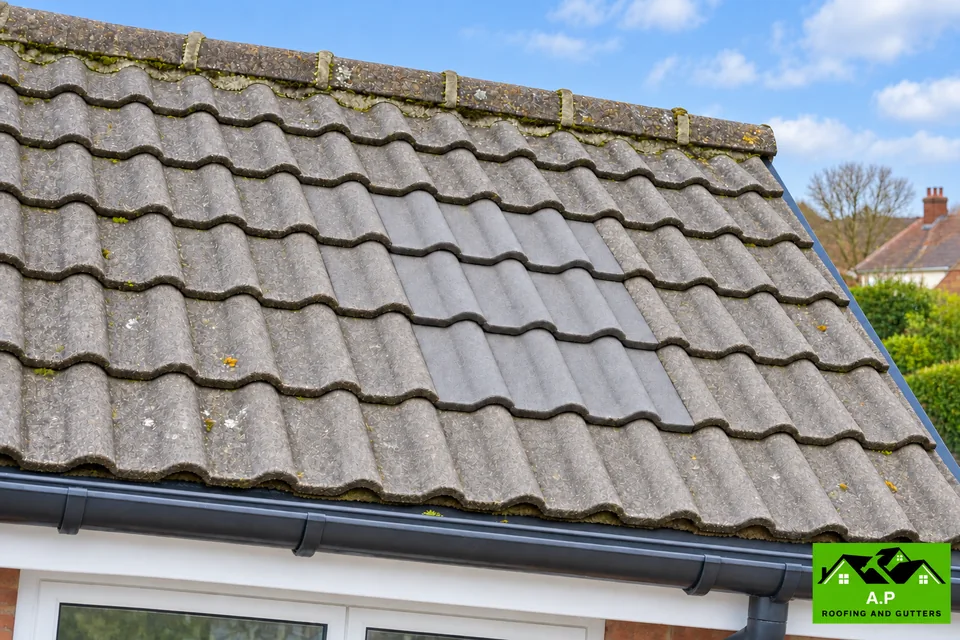
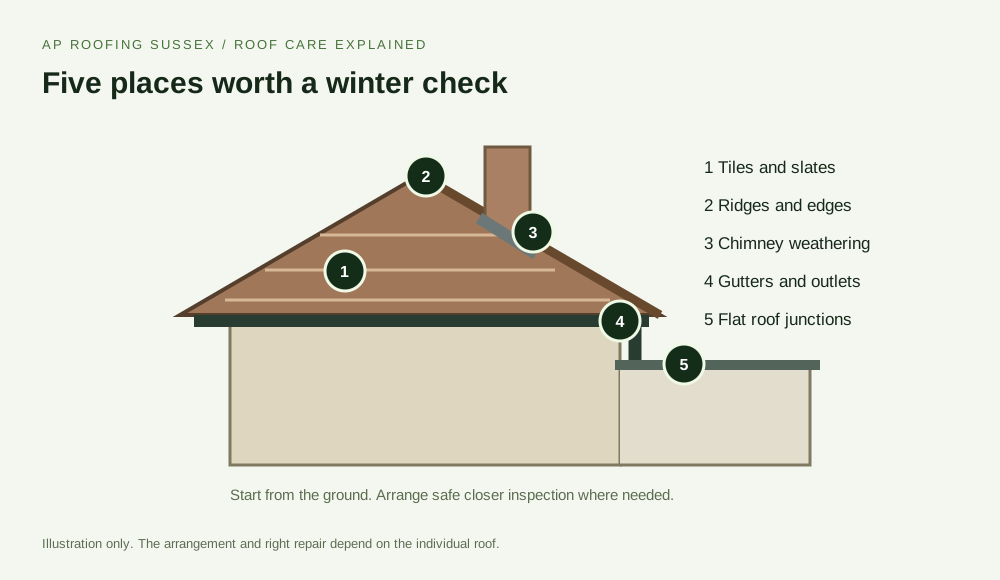
- Tiles and slates: gaps, cracks visible from below, debris in gutters or fragments on the path.
- Ridges and verges: displaced pieces or obvious loss of bedding at exposed edges.
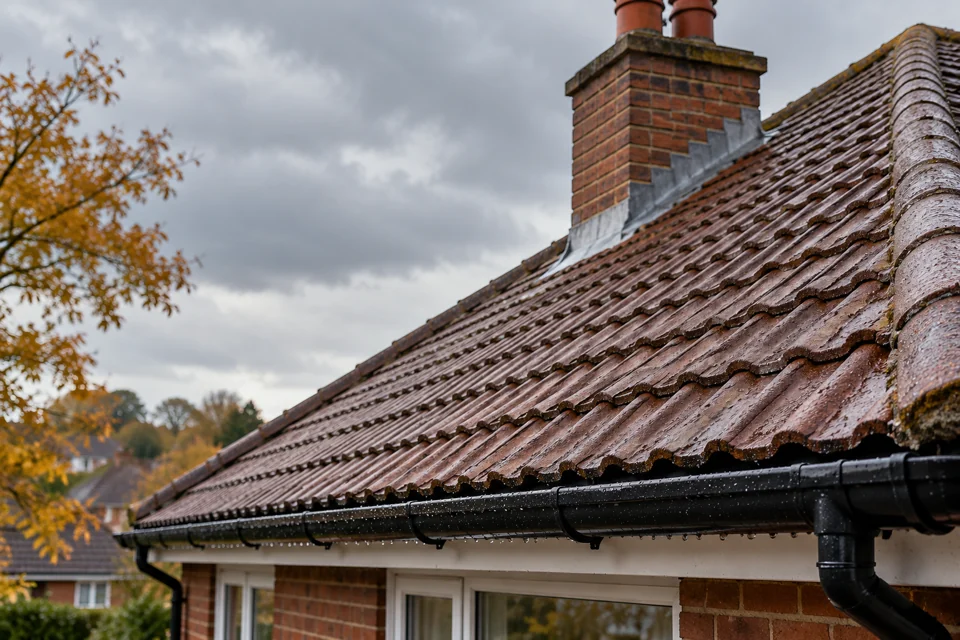
- Chimneys and roof junctions: loose weathering, visibly open joints or new staining.
- Gutters and downpipes: vegetation, sagging runs, disconnected outlets and repeated overflow.
You will not see every defect this way. The purpose is to identify reasons for a closer inspection, not to certify the roof from the driveway.
Watch where the rain actually goes
A brief look during ordinary rain, from somewhere sheltered and safe, can reveal more than a dry-day photograph. Does water enter the gutter cleanly? Does it spill at a joint, over the front or behind the fascia? Is the downpipe discharging to the drainage point rather than onto the wall?
Clearing leaves is useful, but a gutter can still overflow because its fall, brackets, outlet or capacity needs attention. Ask for the flow to be checked after cleaning. Where trees overhang the property, further leaf fall may justify another visit later in the season.
Give flat roofs and rooflights their own check
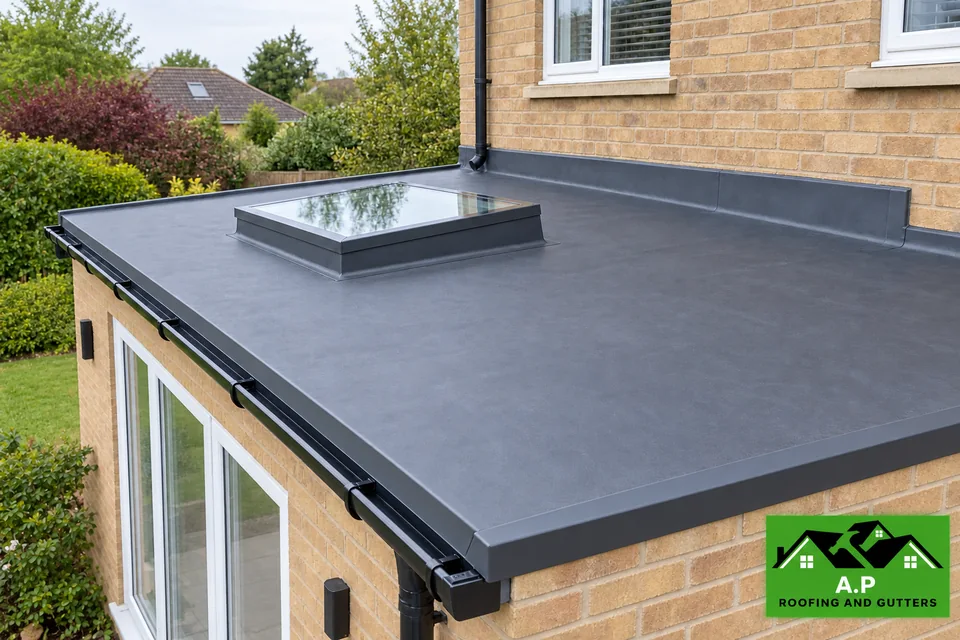
Extensions, porches and garages often have roof details that cannot be seen from the street. Mention any flat roof that has started leaking, retaining water differently or showing lifting edges. Rooflight junctions and outlets deserve attention as well as the open area of covering.
Do not step onto a garage or extension roof to test it. Its deck may be weakened even when the surface looks serviceable. An inspection should consider the covering, support, drainage and adjoining walls together. See our guide to flat roof leaks in winter if this is the part worrying you.
Look inside only where access is safe
If the loft has safe access, lighting and a suitable boarded area, look for a new local wet mark, damp insulation or droplets on the underside of the roof. Keep to the boarded area and do not reach across joists. If access is awkward, leave the inspection to someone equipped for it.
Widespread droplets after a cold night can have a different cause from a wet patch after rain. Avoid stuffing insulation into gaps at the eaves or blocking vents to make the loft warmer. Our leak or condensation guide explains the clues and why both can occur together.
Put the work in a sensible order
An active leak, unstable tile or loose gutter needs prompt attention. A sound roof with a local defect may need only a small repair and routine drainage maintenance. Cosmetic weathering without a defect is a different conversation. Ask the roofer to separate those categories.
A useful winter check tells you what was inspected, what could not be accessed, which defects were found and what should happen next. If a larger problem is suspected beneath the covering, the proposal should explain how it will be investigated before a final repair scope is agreed.
AP Roofing Sussex covers Crawley, RH10 and RH11, including Three Bridges, Pound Hill, Maidenbower, Ifield and Tilgate. Tell us about the property and anything you have already noticed. We can discuss a winter roof maintenance visit and a free estimate for the work identified.
Questions worth asking
When should I arrange a winter roof check?
Ideally before the wettest weather arrives, while there is time to plan repairs. If a leak or loose material has already appeared, contact a roofer now rather than waiting for a seasonal appointment.
Does every roof need work before winter?
No. The point is to identify actual defects, drainage problems and any maintenance due. A roof in sound condition may need no repair.
Can I winter-proof the roof completely?
Maintenance reduces avoidable risks, but cannot guarantee that severe weather will cause no damage. Keep an eye on changes and arrange a further check after significant damage or a new leak.
Arrange a winter roof check
Tell us what you have noticed and where the property is. We will discuss the next step and a free estimate for the roofing work.
Explore the repair service ↗General guidance for homeowners. The right repair depends on inspecting the individual roof. Keep checks at ground level unless there is safe, suitable access.