
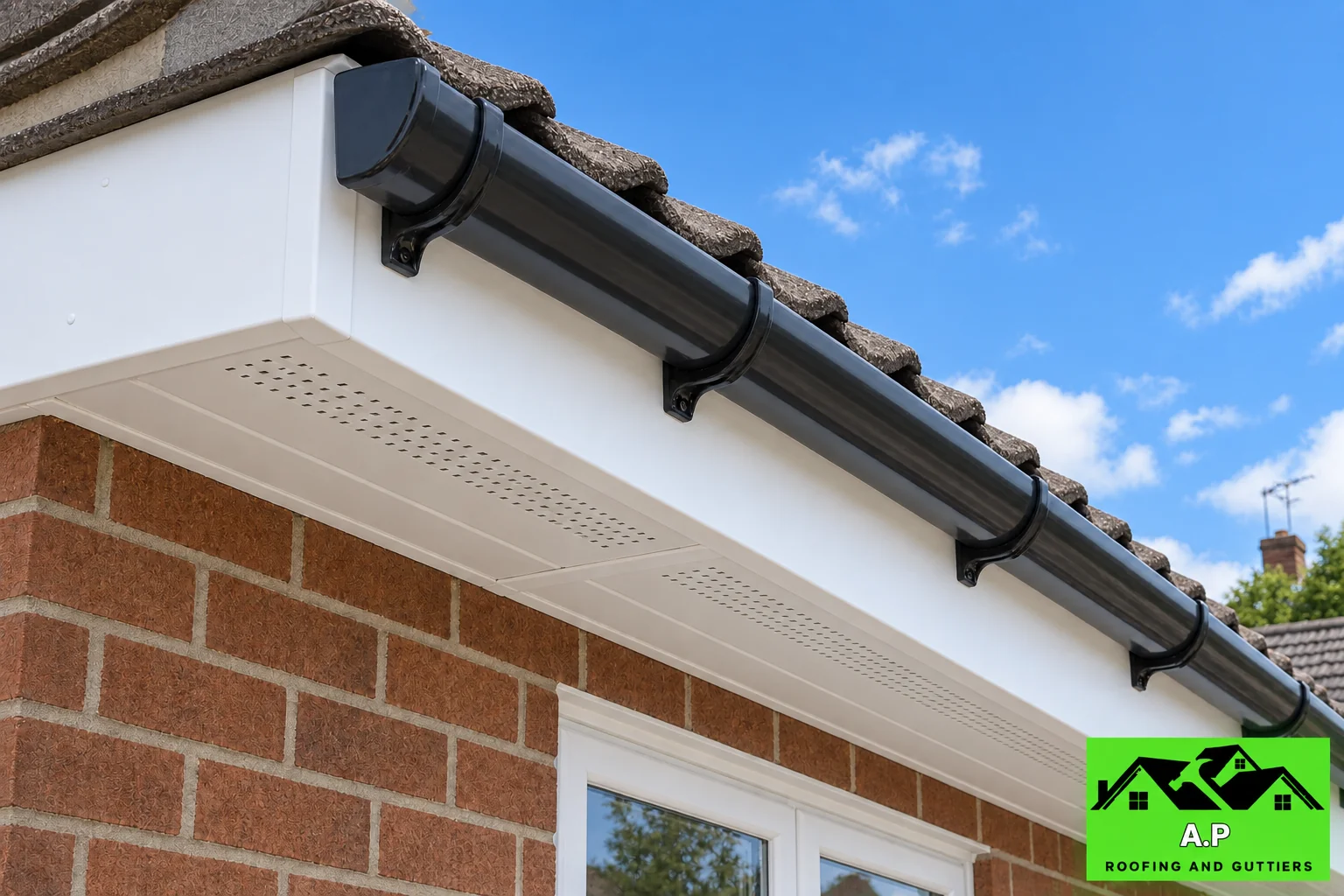
Roof edges and junctions are where different materials meet, move and concentrate water. Flashings, fascias, soffits and gutter supports therefore create a disproportionate number of leaks compared with the size of the area they occupy.
We repair these details around Crawley with attention to the surrounding roof so a new piece of lead or fascia board is not simply attached to an unresolved defect.
Flashing failures at walls and chimneys
Lead or other flashing should turn water away from the junction while allowing normal thermal movement. Splits, loose edges, failed pointing and short or badly lapped pieces can all allow wind-driven rain behind the covering.
We inspect soakers, cover flashing, aprons and back gutters where relevant rather than assuming the visible front edge is the whole detail.
Fascia deterioration
Fascias support the gutter and close the roof edge. Rot can be caused by long-term leaks, overflowing gutters, failed eaves details or water tracking behind the board.
Replacing the fascia without stopping the water source can simply hide the problem behind a new surface.
Soffits and eaves ventilation
Soffits can provide part of the roof’s ventilation strategy. When roofline materials are replaced, ventilation openings should not be casually blocked or reduced.
We check how the existing roof space is ventilated before covering eaves with new materials.
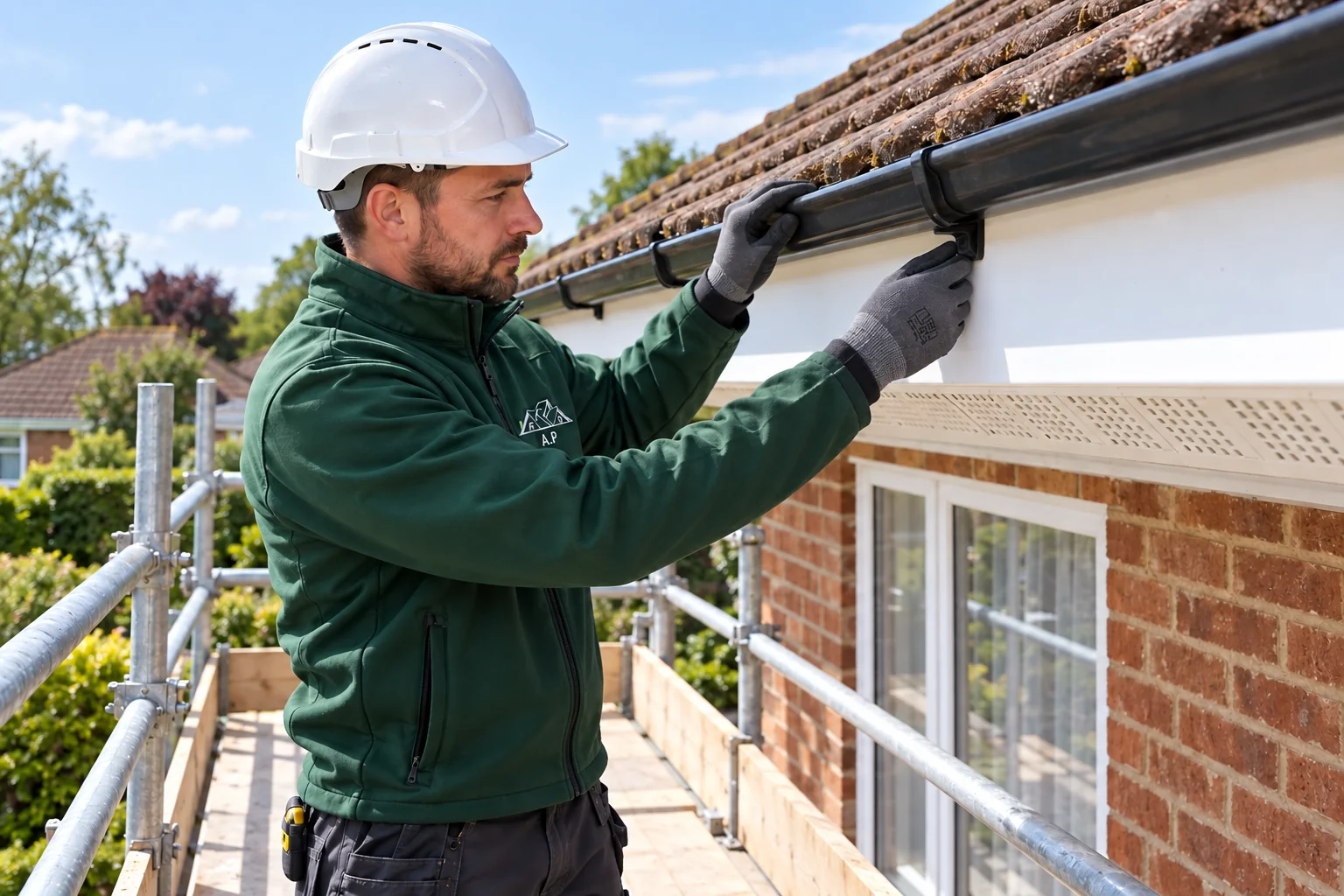
Gutter alignment after fascia repair
Because gutters are fixed to the fascia, roofline work is an opportunity to correct poor falls, loose brackets and awkward outlet positions. The aim is to carry water away cleanly rather than leave a new board beneath a gutter that still overflows.
Separate the roof junction from the roof edge
Flashing protects a change of material or direction, while fascia usually finishes the eaves and supports the gutter. Both can be involved in the same damp problem, but they are not interchangeable repairs. Water may enter higher up at an abutment and emerge behind the fascia. Equally, a poorly aligned gutter may saturate the roof edge without any flashing defect. We trace the route before deciding which components need attention.
Open enough of the detail to understand it
A neat new board can hide weak rafter ends, and a new flashing strip can conceal failed soakers below. Where the visible evidence suggests concealed deterioration, the scope may need selective opening. We explain what can be established at the survey and what remains uncertain until material is removed. The repair should restore sound support, a clear water path and any ventilation that the original roof relies upon.
Finish the gutter connection properly
When fascia work changes the gutter supports, the fall and outlet positions should be checked. Underlay or eaves trays must discharge into the channel, not behind it. At corners and changes in roof level, deliberate junctions are more reliable than trying to fill every gap with sealant after the boards are fitted.
Questions homeowners often ask
Yes where the surrounding timber and support remain sound. We look for the cause of local decay before replacing the section.
Lead and other metals move with temperature. Poorly sized pieces, restricted movement, weak fixings or previous rigid repairs can concentrate stress and cause fatigue.
Only if the fascia was actually the cause. Many leaks at the eaves start higher in the roof or behind the gutter, so diagnosis comes first.
Technical guidance and further reading
What affects the size and cost of the job?
A repair price depends heavily on access and diagnosis. A ten-minute material repair may still need safe roof access, while an apparently small leak can take longer to trace if water has travelled through the roof build-up.
- Height, pitch and safe access method
- Time needed to trace the source of water
- Extent of damage once the area is opened
- Availability of matching tiles, slates or system-specific repair products
- Whether temporary weatherproofing is needed first
- Chimneys, valleys, rooflights or other complex details near the defect
A quote you can actually compare
For repairs, the quote should describe the defect being addressed and the repair area rather than promising to “seal roof” without explanation. Where the exact condition cannot be known until coverings are lifted, the assumptions should be stated clearly.
We prefer defined scopes to vague allowances. If an important part of the roof cannot be confirmed until material is lifted, that uncertainty should be explained before work begins rather than appearing as a surprise at the end.
What we inspect and work on
Lead flashing repairs
Chimney and wall abutments
Fascia repairs
Roof-edge detailing
Local timber condition checks
Related roofing services
More questions about this service
Why is water running behind my gutter?
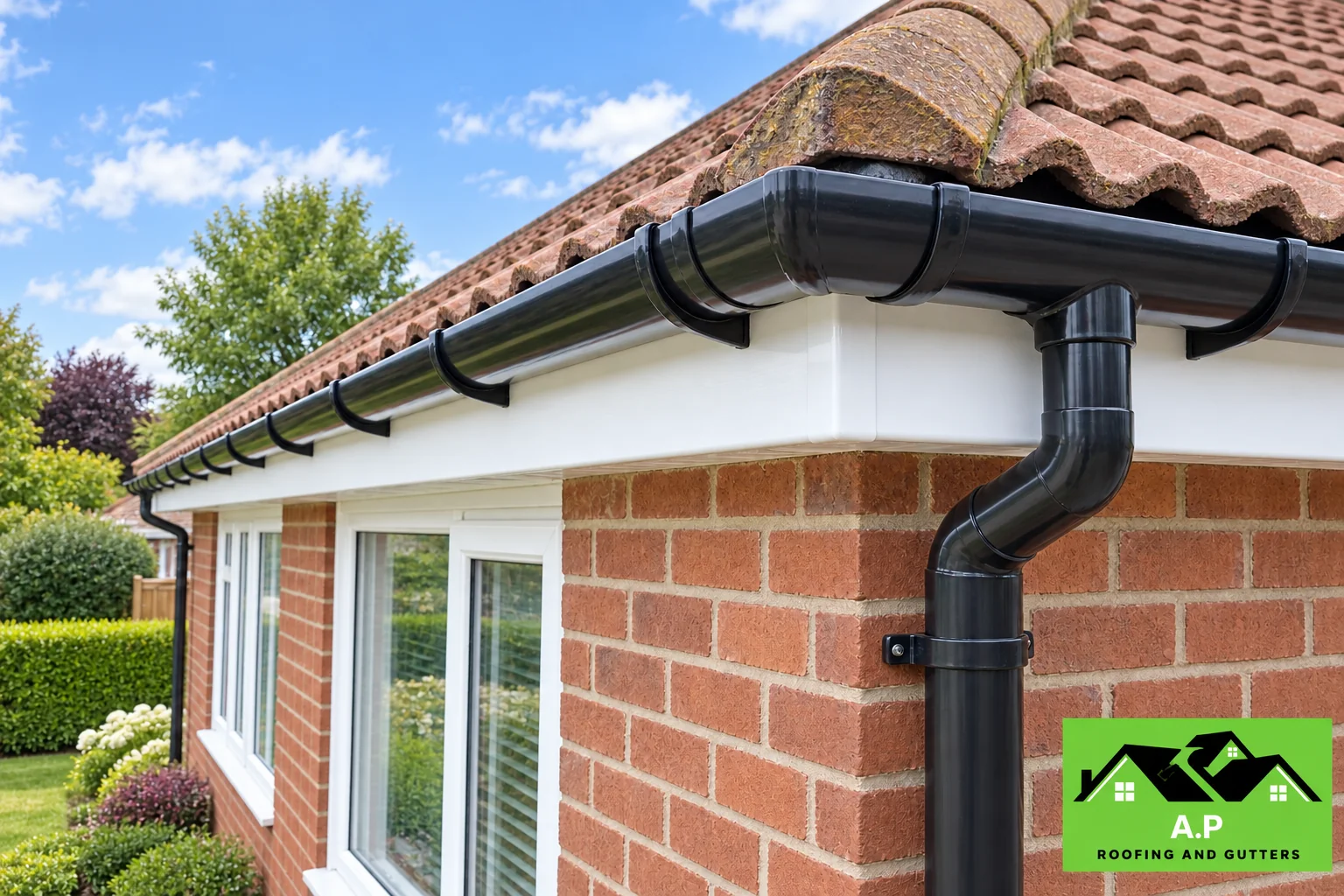
Possible causes include failed eaves support, a short roof-covering overhang, misaligned gutters or water tracking from another defect. The roof edge and gutter need to be inspected together.
Will new fascia boards improve loft ventilation?
Only if the work includes an appropriate ventilation detail. New boards alone do not resolve condensation, and existing airflow routes must be preserved or deliberately redesigned.