In this guide
The timing and wind direction help narrow the investigation. They do not identify a single failed tile or flashing on their own, and the ceiling stain may be some distance from the entry point.
Heavy rain and wind test different parts of the roof
During steady rain, water usually follows the intended path down the roof. A downpour increases the amount that valleys, gutters and outlets have to carry. Wind changes the direction of the rain and the pressures acting around the covering. A vulnerable overlap or junction may then admit water that did not enter in a lighter shower.
This is why “it only leaks when the weather is bad” does not mean there is nothing to repair. Equally, it does not prove that the whole roof has failed. The inspection needs to explain why the particular conditions expose the weakness.
The pattern is useful, but it is not a diagnosis
| What you notice | What deserves investigation |
|---|---|
| Leak during prolonged rain | Drainage, saturation and details that take time to admit water |
| Leak with wind from one direction | Exposed roof edges, overlaps, flashings and wall junctions |
| Water near a chimney breast | Chimney weathering, masonry and connected roof details |
| Damp at an outside wall or eaves | Gutters, roof-edge drainage and wall weathering |
These are inspection prompts. A wall defect, plumbing leak or condensation problem can produce a similar mark. Avoid booking a very specific repair solely because an internet checklist appears to match the room.
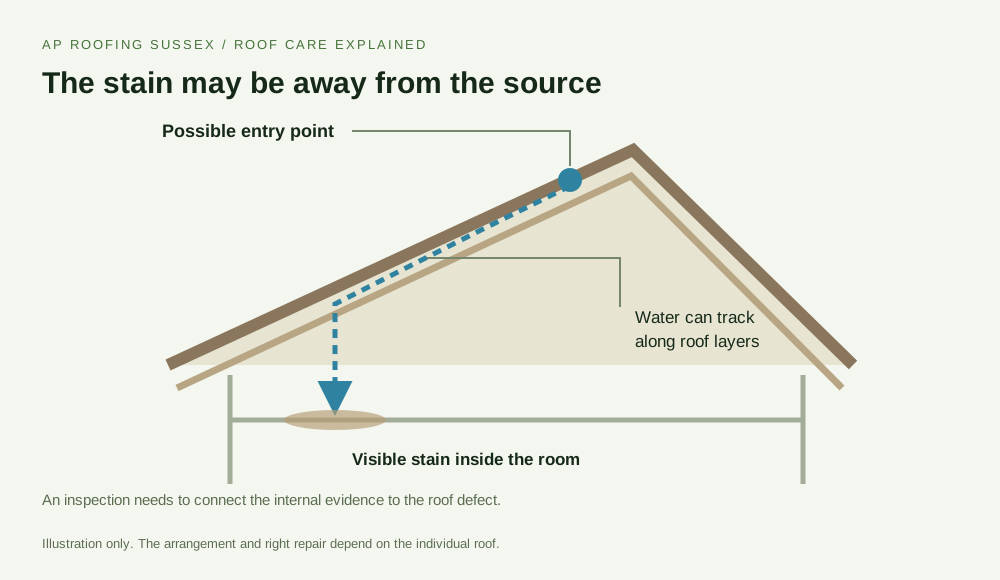
Why the wet patch can be in the wrong place
Rainwater does not always fall straight through. It can track along a timber, cross the underlay or collect in insulation before reaching the plasterboard. On a flat roof it may move within the build-up before escaping at a joint or low point.
A repair directly above the stain can therefore miss the source. The useful question is how the proposed defect connects to the internal evidence. Ask the roofer to explain that route, including any uncertainty or area that needs opening up.
Four details worth checking carefully
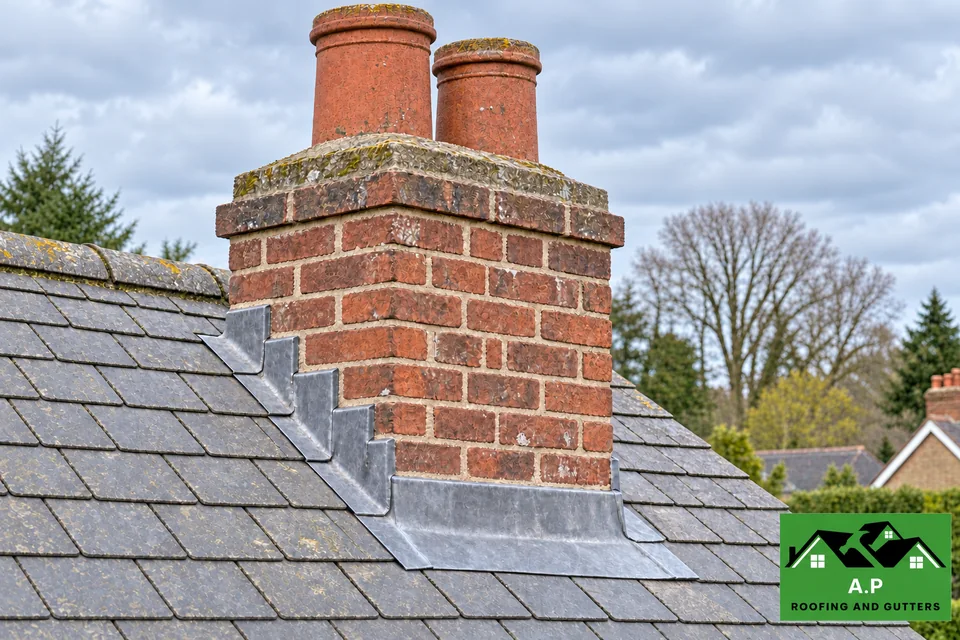
Flashings and abutments. Where a roof meets a wall or chimney, the weathering must cope with runoff and exposure. Lifted edges, splits and failed junctions can be relevant, but the masonry above also needs consideration.
Valleys. A valley collects water from adjoining slopes. Debris, damaged lining or a poor junction can become more apparent when the flow increases. Clearing it and repairing its construction are different jobs.
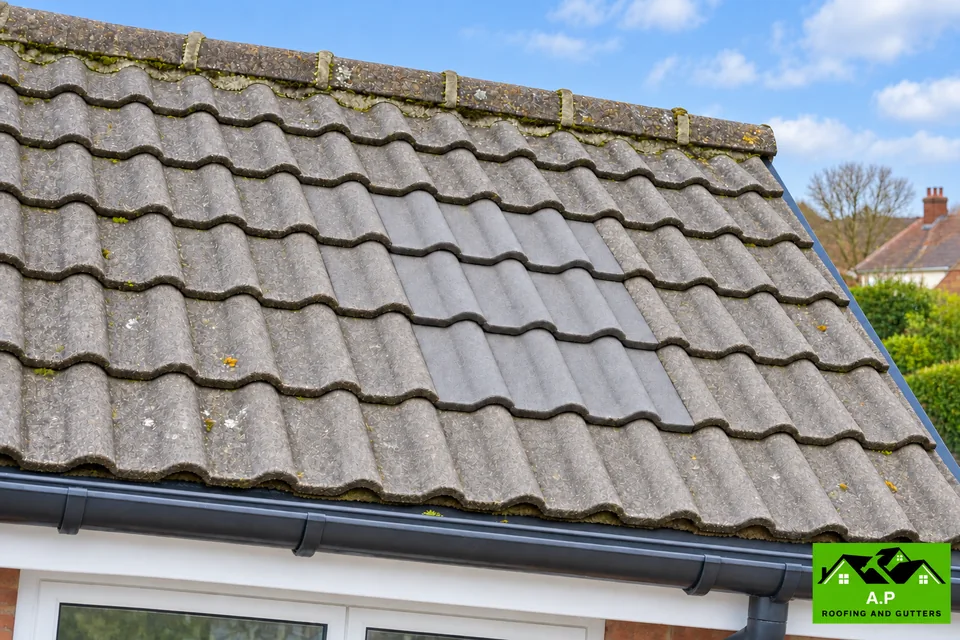
Tiles, slates and their support. Look beyond one visible crack. Displacement, unsuitable overlaps or deterioration beneath the covering can affect how the roof handles rain.
Drainage and roof edges. An outlet restriction or overflowing gutter may wet an area that is dry during ordinary weather. Our gutter and damp guide looks at that distinction.
Keep a short weather record
Record the first appearance of fresh water, the room and approximate position, how long it had been raining and whether the wind was strong. Photograph the stain from the same safe place each time. If you know the wind direction, include it, but there is no need to go outside during a storm to find out.
Also note whether the leak continues after the rain stops. Stored water can drain slowly from the roof layers; continued dripping does not automatically identify a second leak. Tell the roofer about previous repairs and show the original scope if you have it.
What a lasting repair should address
The scope should identify the failed detail and describe how the surrounding sound roof will connect to the repair. Replacing a flashing without considering its adjoining tiles, or clearing an outlet without checking the water path, can leave part of the problem unresolved.
Work carried out in poor conditions may initially be temporary. Ask what follow-up is needed and keep the distinction clear. Once repaired, affected internal materials need time to dry; a mark alone does not prove that fresh water is still entering.
For roof leak repairs in Crawley, AP Roofing can assess the evidence and explain the next step. If water is coming in now, mention that when you call. Keep clear of a bulging ceiling and any wet electrical fitting, and do not climb onto the roof.
Questions worth asking
Why does the roof look fine from the ground?
Many faults are at overlaps, junctions or beneath the covering. A ground-level view may show no obvious gap even though a detail is admitting rain.
Should I wait for rain before booking an inspection?
No. Contact the roofer with your photographs and weather notes. A dry-weather inspection can still be useful, and any further investigation can then be planned safely.
Will a hose test find the leak?
Sometimes a controlled test is helpful after inspection, but it needs a considered method. Randomly soaking the roof can create misleading results or introduce more water.
Get the leak investigated
Tell us what you have noticed and where the property is. We will discuss the next step and a free estimate for the roofing work.
Explore the repair service ↗General guidance for homeowners. The right repair depends on inspecting the individual roof. Keep checks at ground level unless there is safe, suitable access.