
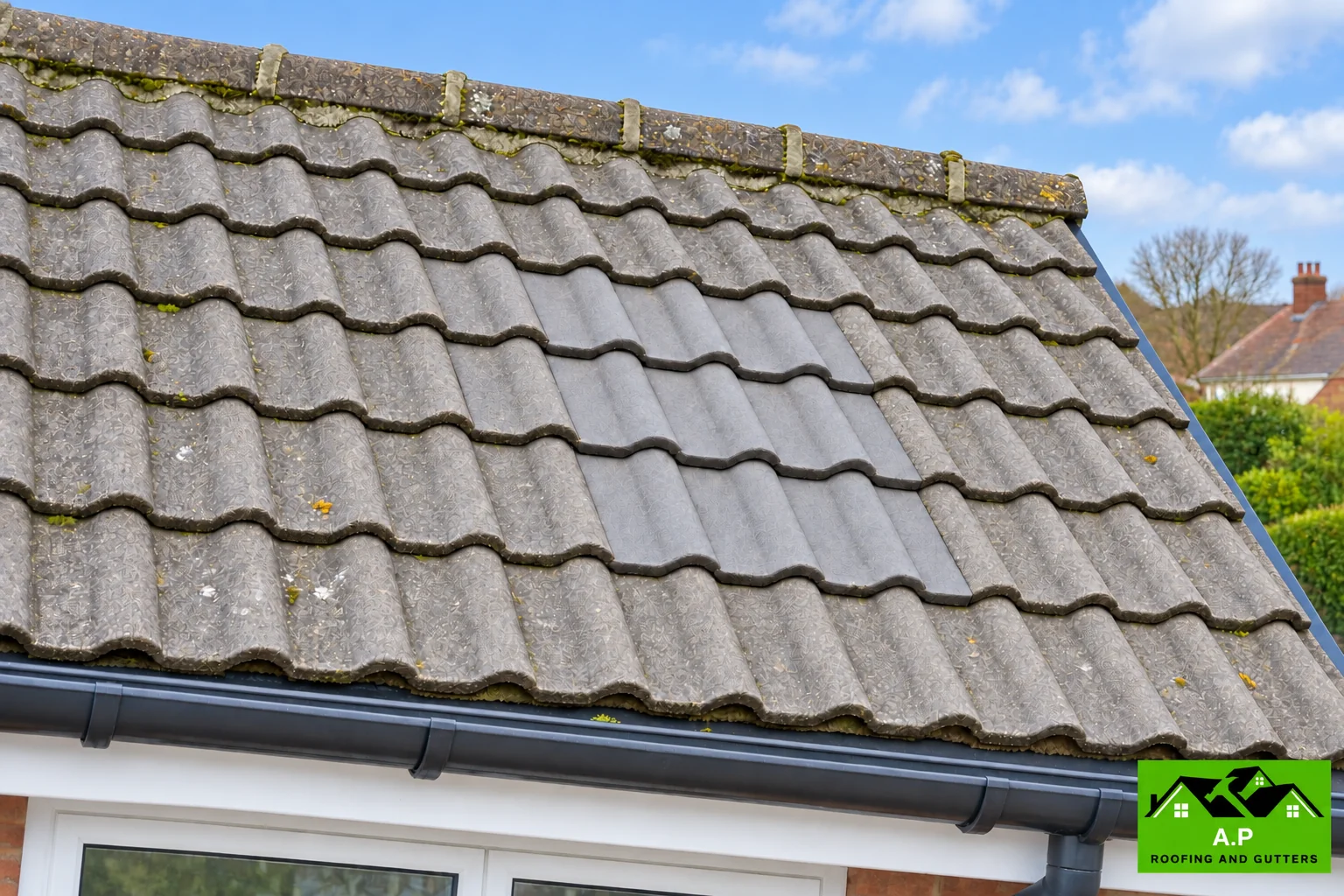
High winds can lift tiles and slates, dislodge ridge units, tear flat-roof edges and pull at gutters or flashings. The urgent risk is not just water ingress; loose materials can also fall from height.
We deal with storm-damaged roofs around Crawley by separating make-safe work from the permanent repair and documenting what has happened clearly.
What to check after a storm
From the ground, look for missing or uneven tiles, ridge pieces out of line, hanging gutters, loose flashing and debris in the garden. Inside, check loft areas for new daylight or damp where it is safe to do so.
Do not climb onto the roof to investigate. Wet surfaces and damaged coverings make an already hazardous job more dangerous.
Wind damage that is not obvious from below
A covering can be lifted and settle back into roughly the right position while clips or fixings have failed. Edge zones and ridges see higher wind forces, so an inspection may find movement beyond the one missing tile visible from the ground.
Flat-roof perimeter trims can similarly loosen without the membrane immediately tearing.
Temporary weatherproofing
If permanent work cannot be completed safely or materials are unavailable, a temporary weatherproofing measure can reduce further water ingress. It should be stable, compatible enough for short-term use and clearly identified as temporary.
We then return to rebuild the failed detail once conditions allow.
Insurance evidence
If you plan to involve an insurer, take safe photographs before work where possible and follow the insurer’s notification process. Emergency action should still be taken where delay would allow avoidable damage or leave loose materials dangerous.
We can describe the visible roofing defect and proposed repair, but policy coverage remains a matter between the property owner and insurer.
Look beyond the first missing tile
Wind can weaken clips or lift a ridge unit without leaving a large visible gap. After storm damage, the surrounding edge and nearby courses need checking as well as the obvious opening. Flat-roof trims, gutters and flashing can also move while remaining attached. Loose materials over an entrance or path deserve prompt attention because the risk is not limited to water entering the building.
Document the condition without taking risks
Photograph visible damage from ground level and record when it was first noticed. Keep any safe-to-collect fallen pieces for identification, but do not approach hanging material or climb onto the roof. If you intend to make an insurance claim, follow the insurer’s notification process and retain the roofing assessment and invoices. We can describe the observed damage and proposed repair, while the insurer determines the relationship to the event and the cover available.
Make the permanent repair suit the exposure
Replacing the missing units is only part of the task if supporting timber or surrounding fixings have also failed. The repaired detail should suit the roof system and its location. Temporary weatherproofing may be needed first when access or material conditions prevent a durable finish; its purpose and follow-up should be clear.
Questions homeowners often ask
It can be if the roof is exposed to further rain, if underlay is damaged, or if loose material poses a falling hazard. The location and weather forecast affect urgency.
Only if they are sound and can be safely refixed. Cracked or damaged units should be replaced with compatible material.
Not if it means climbing onto the roof. HSE guidance treats roof work as high risk, and wet or storm-damaged roofs are particularly unsafe.
Technical guidance and further reading
What affects the size and cost of the job?
A repair price depends heavily on access and diagnosis. A ten-minute material repair may still need safe roof access, while an apparently small leak can take longer to trace if water has travelled through the roof build-up.
- Height, pitch and safe access method
- Time needed to trace the source of water
- Extent of damage once the area is opened
- Availability of matching tiles, slates or system-specific repair products
- Whether temporary weatherproofing is needed first
- Chimneys, valleys, rooflights or other complex details near the defect
A quote you can actually compare
For repairs, the quote should describe the defect being addressed and the repair area rather than promising to “seal roof” without explanation. Where the exact condition cannot be known until coverings are lifted, the assumptions should be stated clearly.
We prefer defined scopes to vague allowances. If an important part of the roof cannot be confirmed until material is lifted, that uncertainty should be explained before work begins rather than appearing as a surprise at the end.
What we inspect and work on
Displaced tiles and slates
Ridge and hip damage
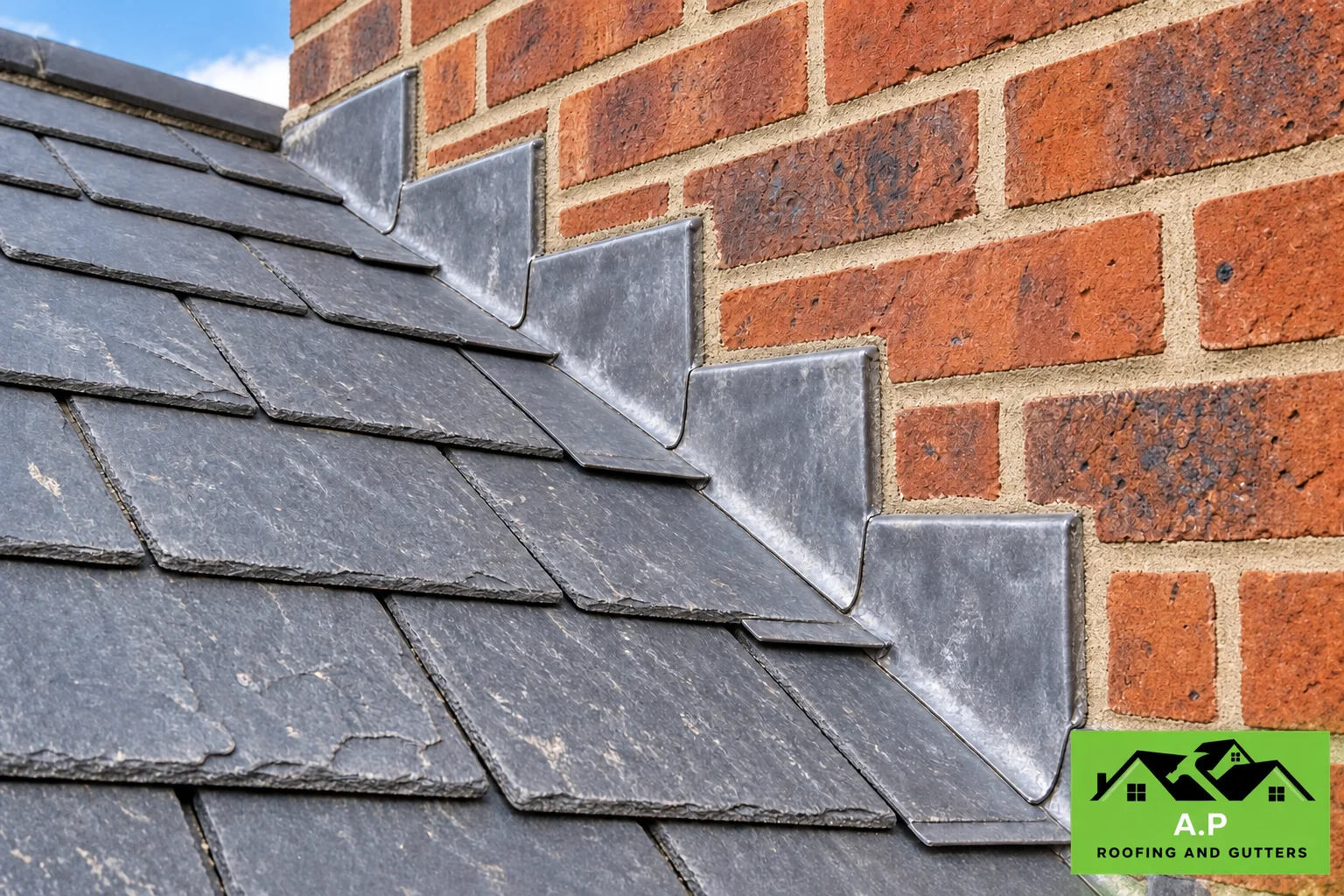
Lead flashing movement
Emergency temporary weathering
Permanent storm repairs
Related roofing services
More questions about this service
Should neighbouring tiles be checked after wind damage?
Yes. A tile can move and settle back while its fixing remains damaged. The surrounding area should be assessed rather than assuming only the missing unit was affected.
Will insurance pay for an old roof after a storm?
That depends on the policy and the insurer’s assessment of the cause and condition. We do not promise coverage; our role is to identify the roofing defect and explain the work required.