In this guide
Use the weather, distribution of damp and recent changes to guide an inspection. Neither a stain nor a photograph can reliably rule out a leak, condensation or both.
Start with when the water appears
Rainwater entry often has a relationship with rainfall: a local mark after a downpour, water near a chimney during wind-driven rain or a drip that starts after hours of wet weather. Condensation may be more noticeable after cold nights, including periods with no recent rain.
Those patterns are clues rather than rules. Stored rainwater can emerge later, and condensation can be concentrated in particular areas. Record what happened before you draw a conclusion. A roof can also have a weathering defect and insufficient moisture control at the same time.
Compare the pattern, without treating it as proof
| Observation | Possible explanation |
|---|---|
| One wet route from a roof junction | Local rainwater ingress needs investigation |
| Droplets across a broad underside area | Condensation is a possibility |
| Stain changes after wind-driven rain | A weather-dependent entry point may be involved |
| Damp after insulation or household changes | Moisture movement and ventilation deserve review |
Wet insulation, mould or darkened timber tells you there is a moisture concern. It does not identify the cause or confirm whether the timber is structurally damaged. Persistent or severe symptoms deserve an assessment.
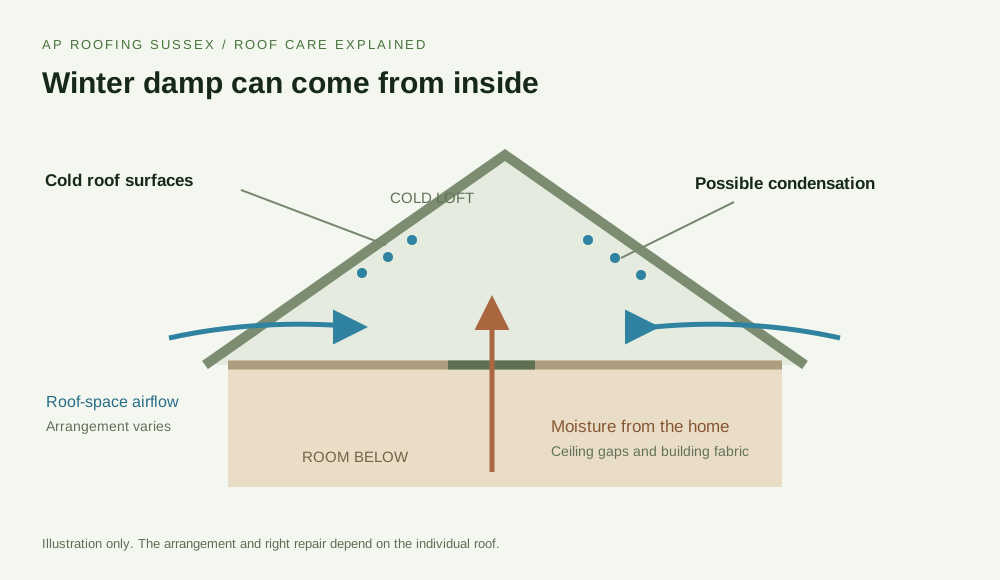
Why condensation becomes more obvious in winter
Everyday living puts water vapour into the air. Some can reach the loft through gaps and the building fabric. If it meets sufficiently cold roof surfaces, liquid droplets can form. Winter creates more opportunities for that to happen.
Recent insulation, draught-proofing or a change in how the home is used may alter the moisture balance. That does not make insulation a mistake. It means the roof build-up, ceiling details, ventilation and household moisture sources need to be considered together rather than changing one thing at random.
What you can sensibly check at home
Keep a note of bathroom and kitchen extraction, indoor clothes drying, whether the loft hatch has been left open and any recent changes. Check that existing room ventilation is being used as intended. Do not disconnect fans or send their exhaust into the loft.
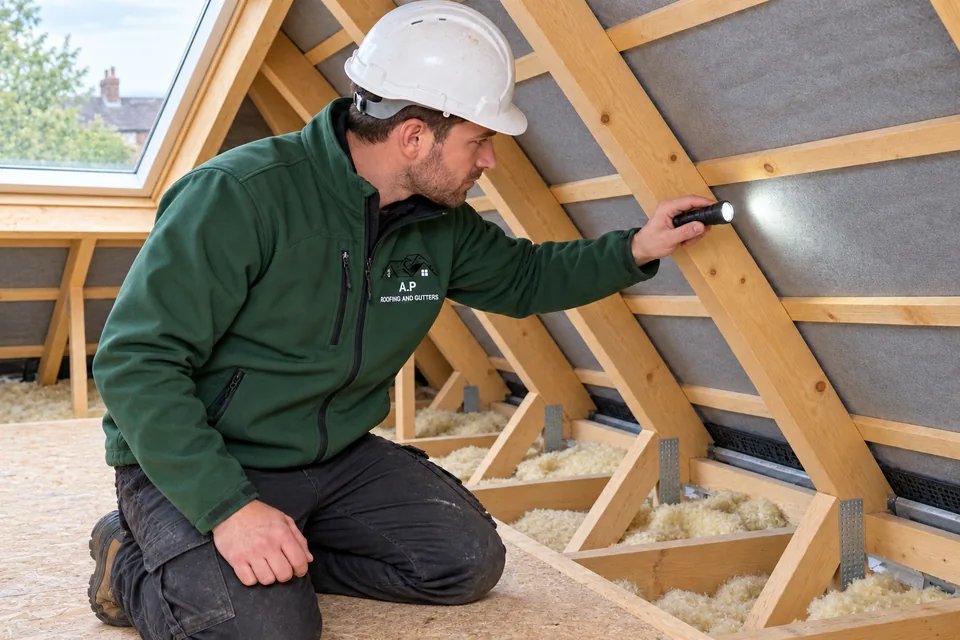
If there is safe boarded loft access, photograph the distribution of droplets from that area. Avoid moving insulation or stored items near wiring or unboarded edges just to get a better view. Do not leave the hatch open as a drying strategy. Where access is unsuitable, let the roofer inspect instead.
Why randomly adding vents can miss the problem
The correct response depends on the roof type, underlay and existing airflow routes. A blocked eaves path is a different problem from a failed extraction duct, and a converted roof space has different details from an open cold loft. Installing a vent without understanding those connections is not a complete assessment.
Ask what evidence supports the recommendation and what result is expected. If the roof covering is also damaged, the leak repair and moisture-control work should be described separately so you understand what each is intended to solve.
What to ask during an inspection
Explain whether damp appears during dry cold weather or after rain. Ask which roof details were checked, whether airflow restrictions were found and whether another trade needs to assess extraction, plumbing or electrics. If timber condition is uncertain, clarify what further investigation is proposed.
After corrective work, allow for drying and monitor the pattern rather than relying on one afternoon’s appearance. If fresh dripping continues, record the conditions and contact the contractor. Wet stored belongings or insulation may need separate attention once the source is understood.
AP Roofing Sussex can discuss roof leak investigation in Crawley and relevant roofing or ventilation work. Tell us what you can see and when it happens. Identifying the cause comes before deciding which repair to quote.
Questions worth asking
Does condensation mean the roof needs replacing?
Not necessarily. The cause may involve moisture from the home, roof-space airflow or connected details. Replacement should be justified by the roof condition, not the presence of droplets alone.
Can a roof leak and condensation happen together?
Yes. Finding evidence of one does not rule out the other. The investigation should follow all the relevant signs.
Should I remove loft insulation to stop condensation?
Do not remove or rearrange insulation as a guess. The insulation and ventilation need to work with the roof construction. Ask for advice based on the actual arrangement.
Discuss the damp in your roof
Tell us what you have noticed and where the property is. We will discuss the next step and a free estimate for the roofing work.
Explore the repair service ↗General guidance for homeowners. The right repair depends on inspecting the individual roof. Keep checks at ground level unless there is safe, suitable access.