
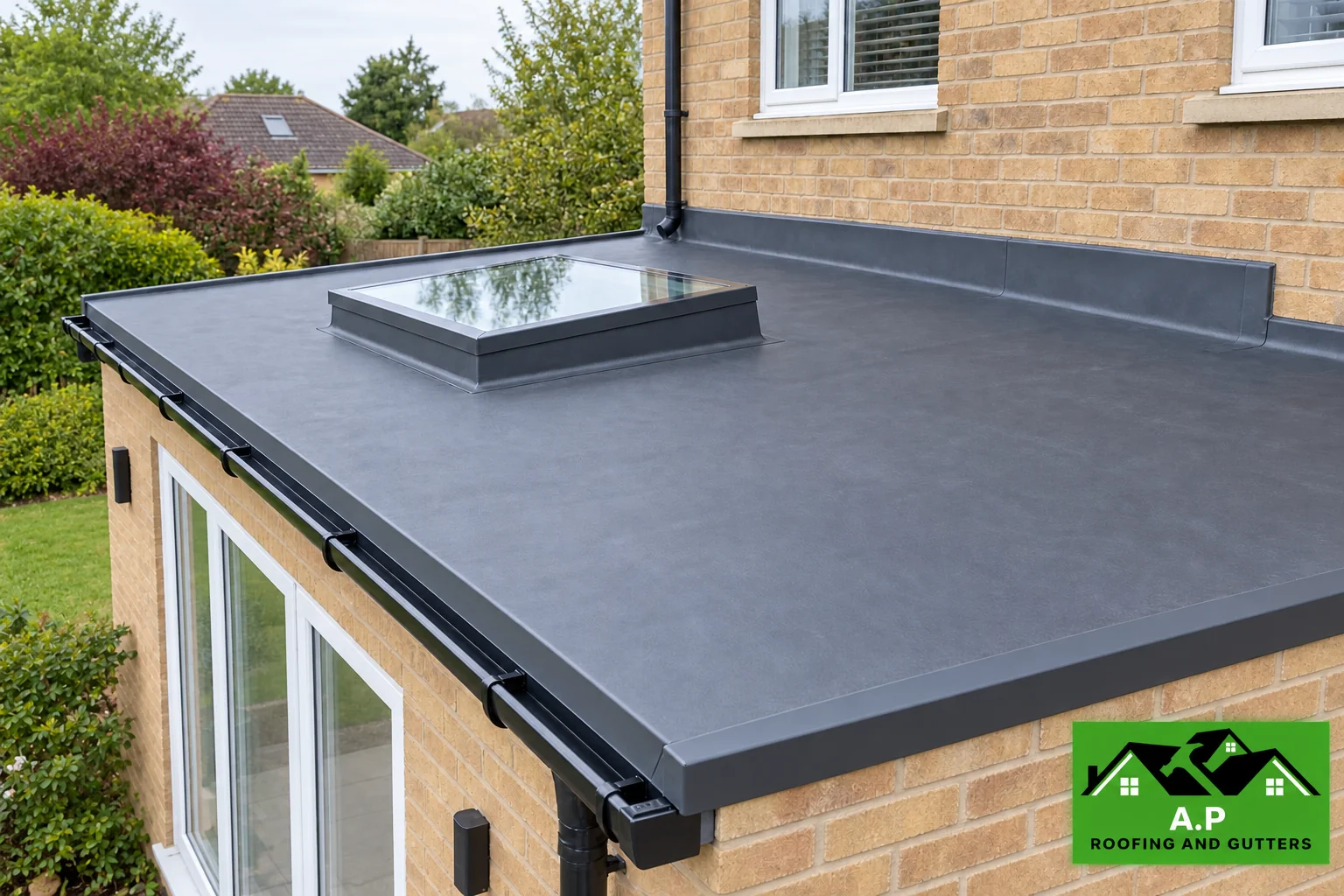
Flat roof maintenance is mainly about spotting changes before they become water ingress. Outlets block, leaves collect behind upstands, trims work loose and other trades can accidentally puncture a membrane. None of those issues mean the whole roof is bad, but they are cheaper to address early.
We inspect flat roofs on garages, extensions, dormers and commercial areas around Crawley with attention to drainage, seams, perimeters and anything that passes through the waterproofing.
What a useful flat roof inspection covers
We check the waterproofing surface for splits, punctures, blisters, open seams or unusual movement, then work outwards to edge trims, upstands, rooflights, pipes and outlets. The drainage path is important because debris often collects exactly where water needs to leave the roof.
A visual check also considers whether new equipment, aerials, cables or maintenance access have damaged the roof since installation.
Drainage and outlet maintenance
Leaves, moss and wind-blown debris can reduce the effective capacity of a small outlet surprisingly quickly. Water then backs up towards laps and upstands that are designed for normal drainage rather than permanent submersion.
Where a roof is enclosed by parapets, overflow arrangements deserve particular attention because there may be no simple edge for excess water to escape.
What not to do to a flat roof
Do not casually pressure wash membranes, drag heavy objects across them or use a roof as a storage platform unless it was designed for that use. Solvents and incompatible sealants can also attack some waterproofing systems.
If the roof has a product guarantee, check repair and maintenance requirements before applying a DIY coating or patch.
When maintenance becomes repair
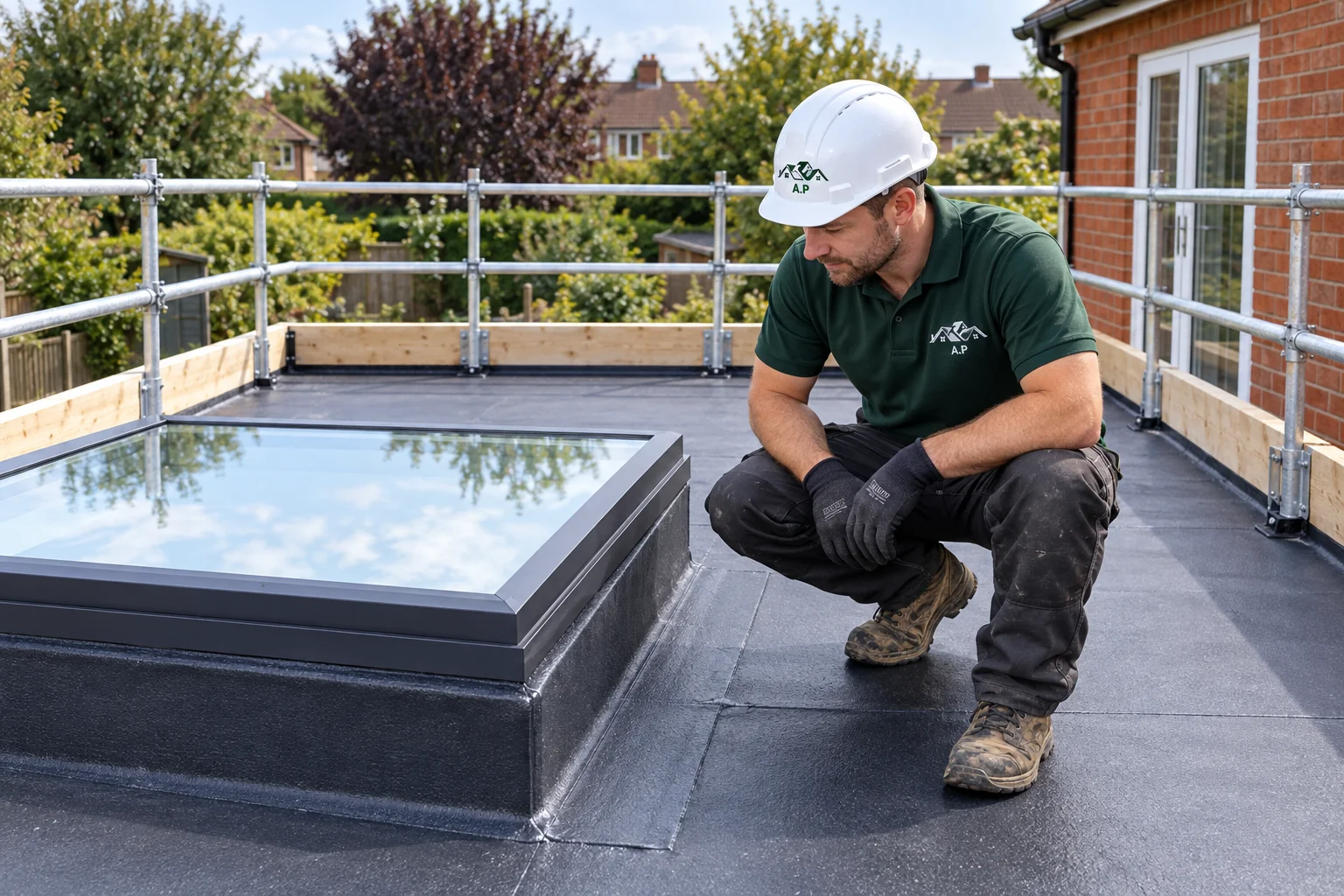
A blocked outlet is maintenance. A split membrane, failed seam, rotten deck edge or loose flashing is repair work. We separate the two because clearing debris without fixing an active defect only postpones the leak.
The condition of the surrounding membrane determines whether a small repair is worthwhile or whether the roof is moving towards planned replacement.
Build the inspection around the roof’s weak points
A useful maintenance visit follows the water route. We look at where leaves collect, whether the outlets remain open, how the membrane is joined to edge trims and whether rooflights or pipe penetrations have moved. On an older roof, previous patches should be checked for lifting edges and incompatible materials. On a newer system, the manufacturer’s care instructions provide the starting point. The inspection frequency should reflect tree cover, exposure and use rather than an arbitrary promise that one annual visit suits every roof.
Keep a simple roof record
Photographs taken from the same safe viewpoint make change easier to spot. Record the system name where known, installation or repair paperwork, outlet locations and any areas that have needed repeated attention. If another trade works on the roof, note where access took place and whether protection was used. A small puncture can become a confusing leak months later when no one remembers the earlier visit. Maintenance findings are most useful when they distinguish immediate repairs from items that can be monitored or included in planned renewal.
What a maintenance visit does not prove
A visual check cannot establish the condition of every concealed deck board or insulation layer. If a surface feels unstable or a leak persists without a clear entry point, further investigation may be needed. We explain those limits rather than treating a quick inspection as a guarantee of the entire roof.
Questions homeowners often ask
A sensible routine is to inspect periodically and after significant storms, with extra attention where trees overhang the roof or outlets are small. Some system manufacturers and industry guides also recommend scheduled checks.
Not unless you know the roof and deck are safe and intended to take access. HSE guidance is clear that roof work needs safe access and planning; unfamiliar roofs should not be treated as safe walking surfaces.
Not automatically. We check the depth, duration, cause, membrane condition and outlet arrangement before deciding whether drainage improvement, local work or replacement is justified.
Technical guidance and further reading
What affects the size and cost of the job?
Flat-roof quotes are shaped by more than square metres. Roof shape, the number of outlets and penetrations, deck condition, insulation, perimeter upstands and how easily materials can be moved to the work area all affect the scope.
- Roof area and number of separate roof zones
- Condition of the deck and whether wet material must be removed
- Waterproofing system and preparation required
- Outlets, rooflights, wall abutments and awkward perimeter details
- Insulation or vapour-control upgrades
- Safe access, edge protection and waste removal
A quote you can actually compare
A useful flat-roof quote should identify the proposed system and, where relevant, the deck preparation, insulation build-up, outlet work, perimeter details and treatment of existing material. A single line saying “new flat roof” makes it difficult to compare two very different specifications.
We prefer defined scopes to vague allowances. If an important part of the roof cannot be confirmed until material is lifted, that uncertainty should be explained before work begins rather than appearing as a surprise at the end.
What we inspect and work on
Clear outlets and drainage paths
Check laps, joints and perimeter trims
Inspect penetrations and flashing details
Identify blistering, splits and surface damage
Plan repairs before internal damage starts
Related roofing services
More questions about this service
Should drains be cleared after roof moss removal?
Yes. Material dislodged from an adjacent pitched roof can accumulate in flat-roof gutters and outlets. Drainage should be checked once the cleaning work is complete.
Can a roof be maintained while under guarantee?
Yes, and maintenance may be a condition of cover. Keep records and use compatible methods. Before altering the waterproofing, check whether the supplier or original installer needs to be involved.