
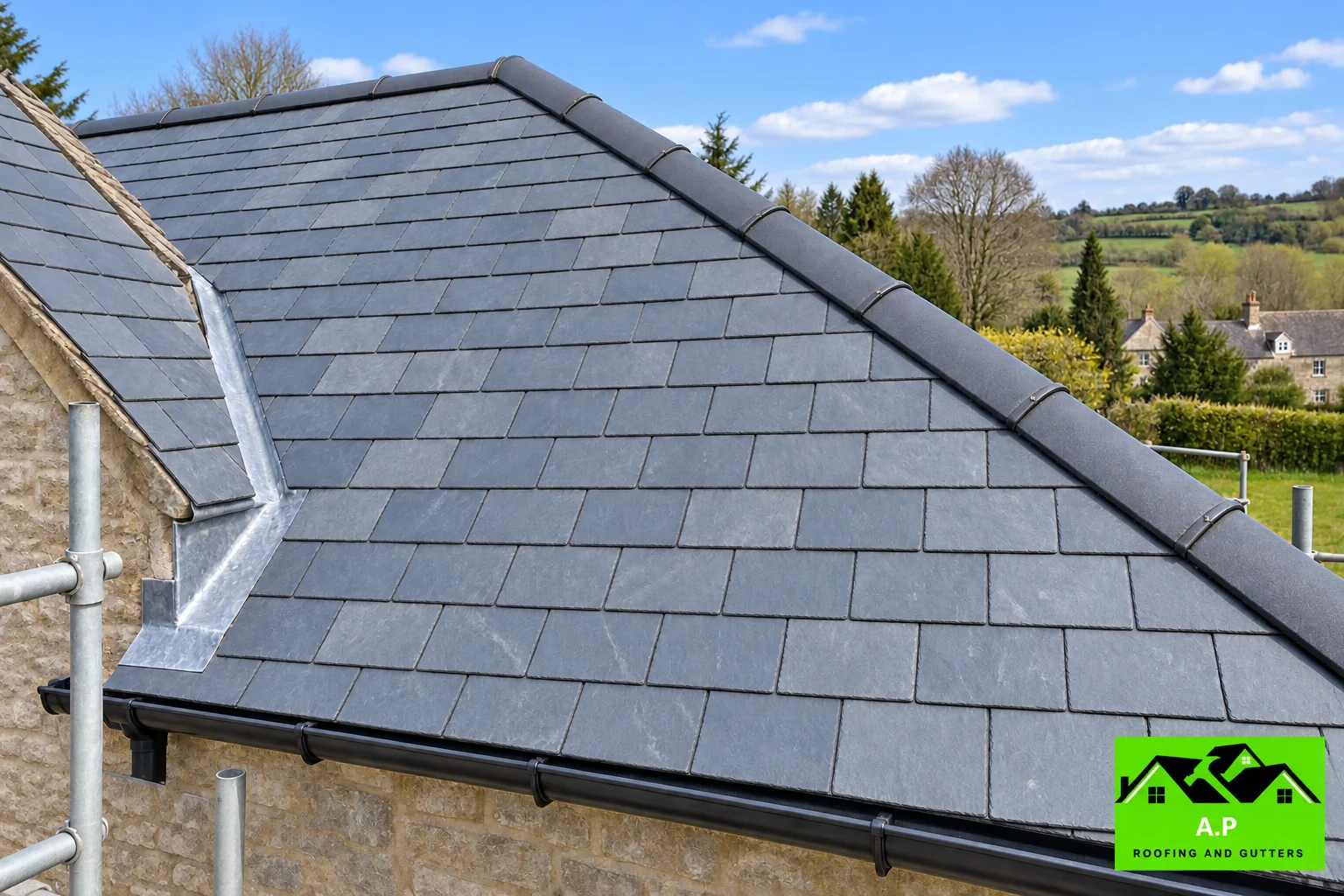
Natural slate is durable, thin and visually distinctive, but it relies on correct headlap, gauge and fixing. A slate roof can remain serviceable long after individual fixings or slates begin to fail, which is why repair and reuse are often worth considering before wholesale replacement.
We repair and reroof slate properties around Crawley, matching size and appearance where practical and paying close attention to valleys, ridges and lead junctions.
Why slate roofs fail
Individual slates can crack through impact or foot traffic, while older metal nails may corrode and allow otherwise good slates to slip. This is often called nail sickness.
Widespread slate delamination or repeated fixing failure changes the economics, but a handful of slipped slates does not automatically mean the whole roof is finished.
Pitch, headlap and slate size
Natural slate performance depends on roof pitch, exposure, rafter length and the amount of overlap between courses. Manufacturer and British Standard guidance uses those factors together rather than one universal headlap figure.
This is especially important when selecting replacement slate for a low-pitch or exposed roof.
Nail fixing and hooks
Slates may be nailed or hook-fixed depending on the roof and specification. Hook use has pitch limitations, while perimeter zones often need additional restraint.
For repairs, the fixing method should secure the replacement without damaging surrounding slates or creating an obvious improvised patch.
Reusing sound slate during reroofing
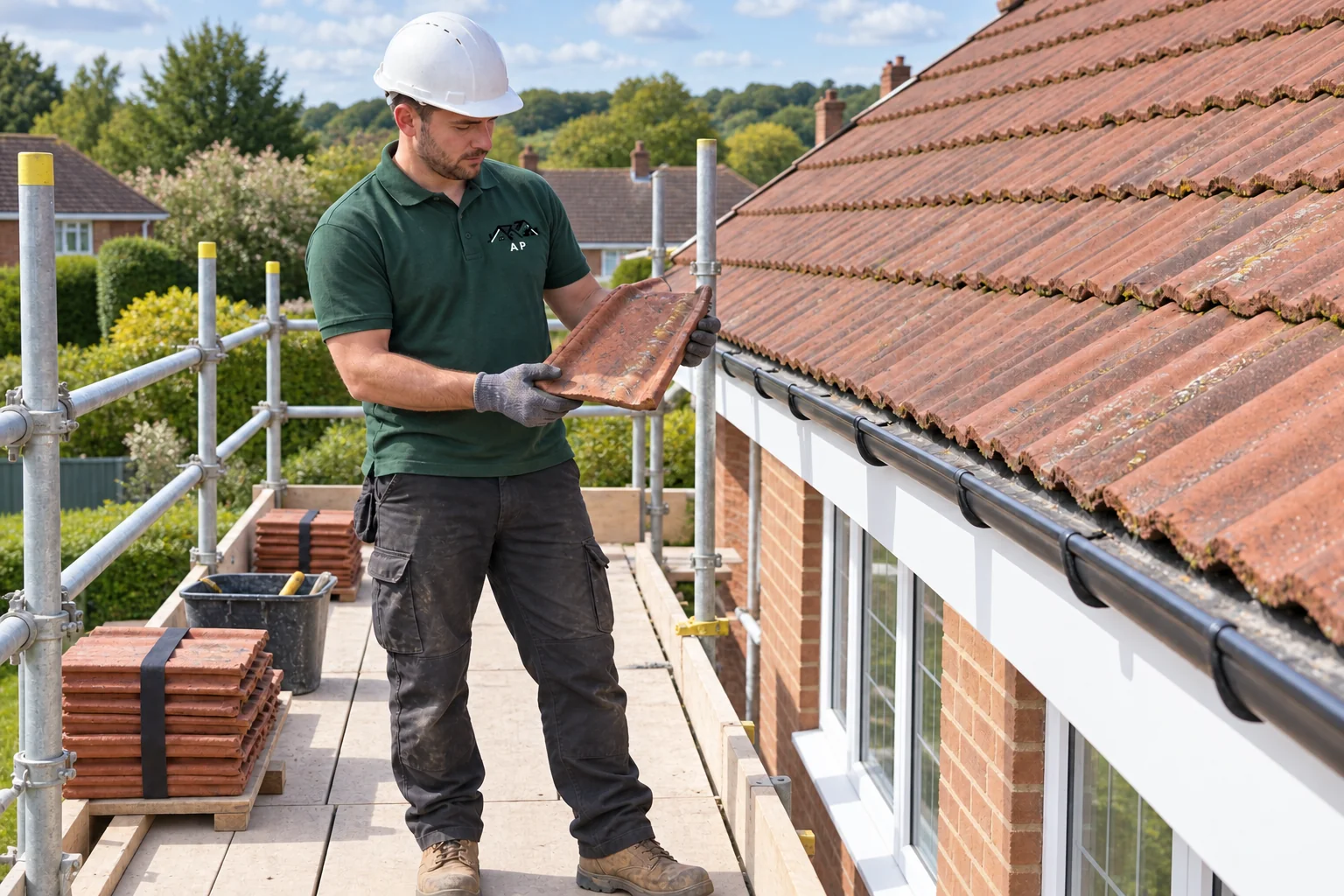
A reroof does not always mean throwing every original slate away. Sound natural slate can often be sorted and reused, with replacements introduced to make up the quantity required.
This can preserve the character of an older roof and make good use of a durable material, although sorting labour and breakage have to be allowed for honestly.
Slate roofs on older buildings
Historic England encourages repair of serviceable older roof fabric and retention of important features. On visible character properties, slate size, coursing and ridge details can be significant to the appearance of the building.
Listed buildings and some conservation work may require additional permission before material is changed.
Check the slate and its fixings separately
A slate can remain sound while the nail holding it has corroded. Conversely, a securely fixed slate can become thin or delaminate with age. These are different problems and lead to different repair decisions. We look at the spread of failures across the slope, the condition of battens and how the surrounding slate responds to handling. A few slipped units do not automatically justify stripping a roof, but repeated failures may make a wider planned repair more economical.
Reusing slate during a reroof
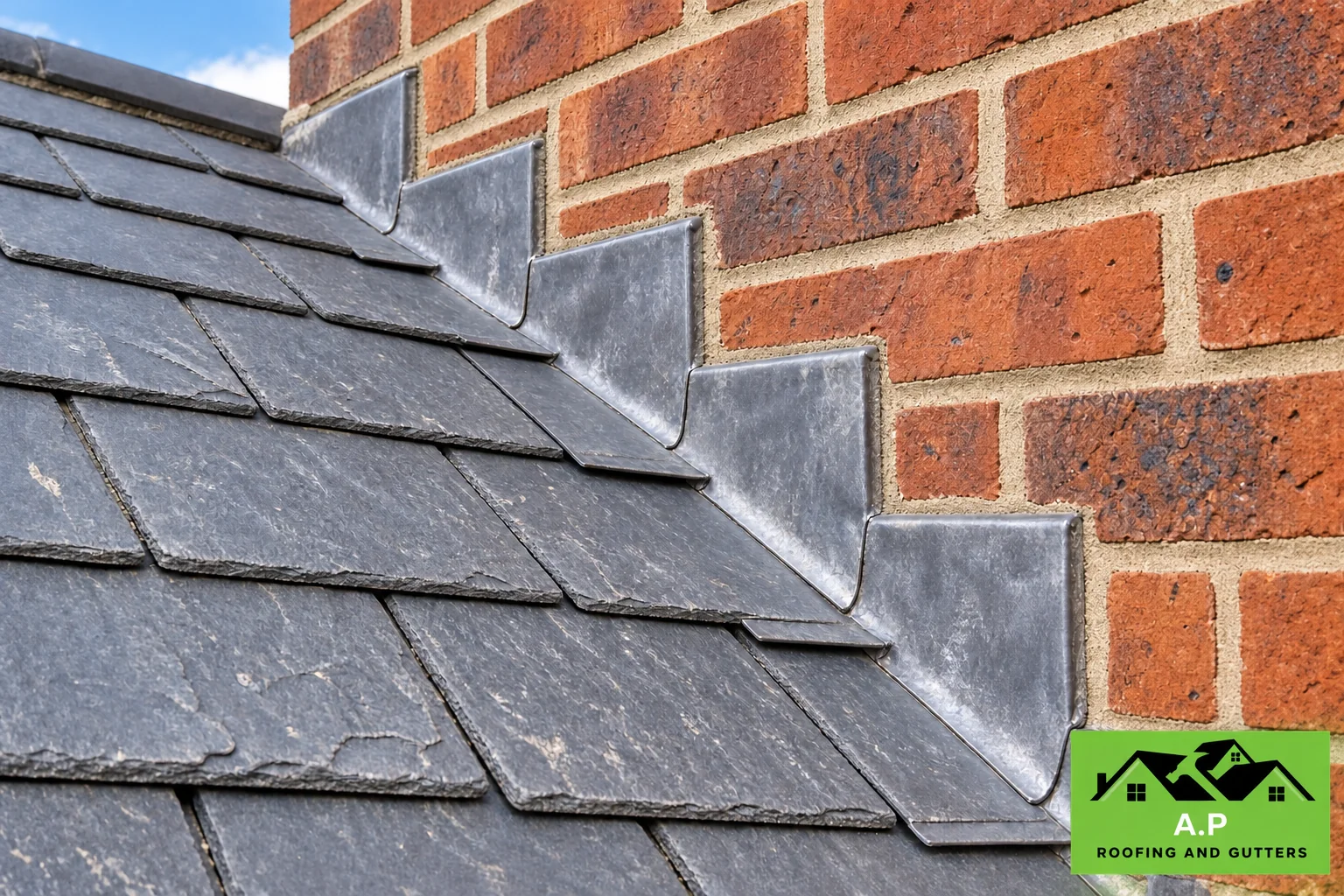
Sound slates can sometimes be salvaged, sorted and relaid onto renewed supporting layers. Allowance is needed for breakage, unusable pieces and additional matching material. Size and thickness influence the finished coursing, so reclaimed stock should be assessed for more than colour. The new fixing and headlap specification must suit the roof’s pitch and exposure. On a character property, ridge, hip and lead details help preserve the appearance just as much as the main field of slate.
Natural slate and manufactured alternatives
Natural slate and fibre-cement products differ in composition, size, appearance and fixing requirements. They should not be described as interchangeable simply because both are grey and thin. We discuss the actual material proposed, the structural and visual implications and any permission considerations before changing an existing roof.
Questions homeowners often ask
Yes. Individual slates can often be refixed or replaced without disturbing the whole roof, assuming surrounding material is sound.
It describes corrosion or failure of the nails holding older slates, causing slates to slip even though the slate itself may still be reusable.
Only where the slate size, headlap, fixing and exposure are suitable. The required specification changes with pitch and site conditions.
Yes where it is sound, correctly graded and suitable for the roof. It can be particularly useful for matching older work.
Technical guidance and further reading
What affects the size and cost of the job?
Pitched-roof work is affected by roof size and pitch, but the number of valleys, hips, chimneys, rooflights and party-wall junctions can matter just as much. Matching an older tile or slate can also change material availability and labour.
- Roof area, pitch and number of slopes
- Tile or slate type and availability of compatible replacements
- Valleys, ridges, hips, verges, chimneys and rooflights
- Condition of battens, underlay and accessible timber
- Scaffolding, access and protection of lower roofs or conservatories
- Extent of local repair versus opening a larger area
A quote you can actually compare
A clear quote should say which coverings are being removed or retained, how the damaged area will be accessed, what happens to underlay or battens if found defective, and how key junctions will be weathered. That is more useful than comparing only the bottom-line number.
We prefer defined scopes to vague allowances. If an important part of the roof cannot be confirmed until material is lifted, that uncertainty should be explained before work begins rather than appearing as a surprise at the end.
What we inspect and work on
Slipped slate repairs
Broken slate replacement
Slate reroofing
Lead and valley details
Matching natural or compatible slate
Related roofing services
More questions about this service
What does nail sickness mean?
It commonly describes deterioration of the metal fixings on a slate roof, allowing slates to slip even when the slate itself is reusable. The spread of fixing failure influences whether repair or relaying is sensible.
Can a slate roof be pressure washed?
Aggressive cleaning can damage a fragile covering or force water beneath laps. The material and condition should be assessed first, and a conservative maintenance approach is often more appropriate.