
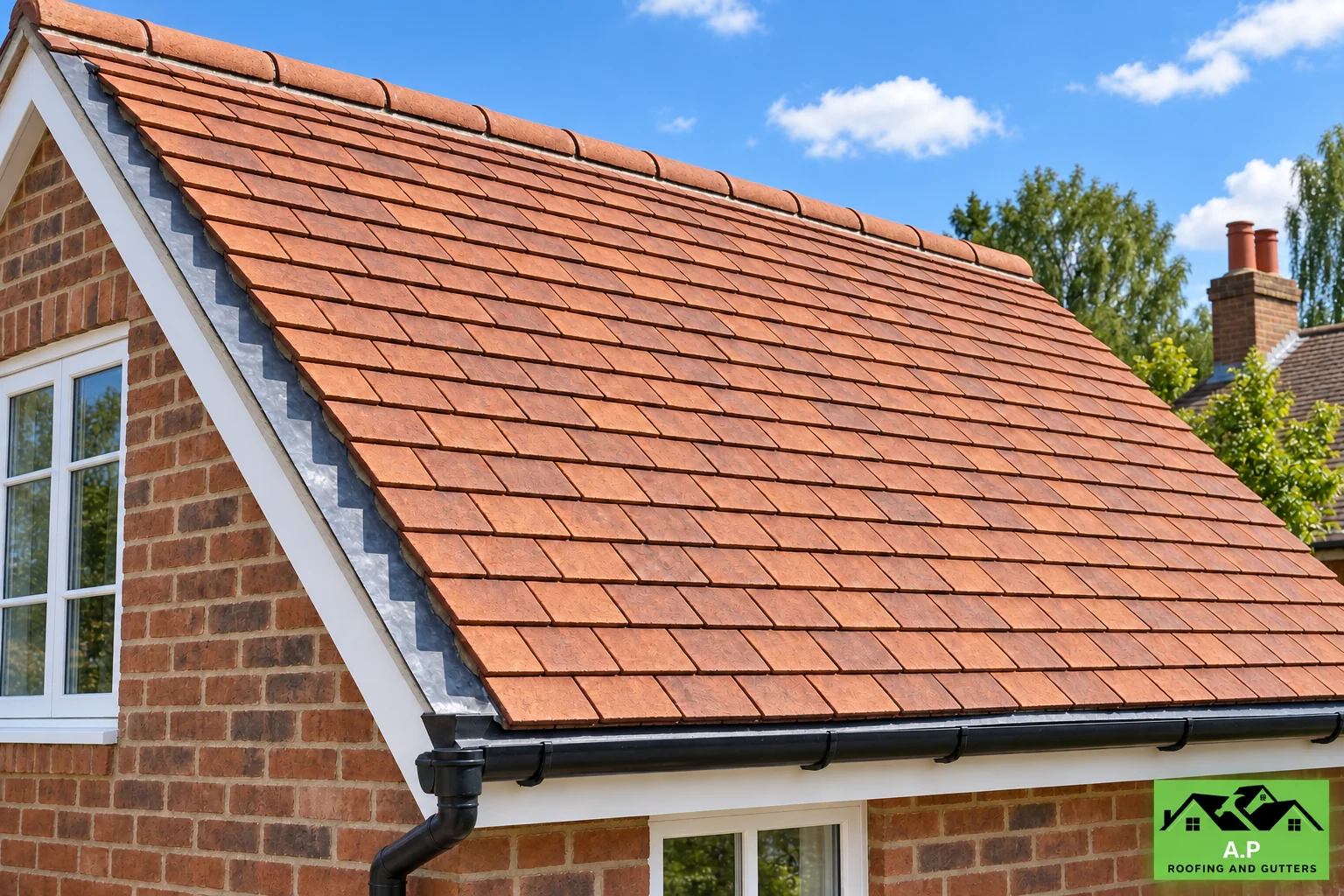
Tiled roofing covers everything from small clay plain tiles to large concrete interlocking units. The visible material changes, but the fundamentals do not: the pitch, gauge, headlap, battens, fixings and roof details all have to suit one another.
We repair and replace tiled roofs across Crawley, matching existing profiles where practical and specifying new coverings for the actual roof rather than choosing solely from a sample board.
Plain tiles and interlocking tiles
Plain tiles create a dense double-lap covering with many individual units, giving a traditional appearance on many older homes. Interlocking tiles cover more area per unit and use shaped side joints to manage weather.
The two systems have different batten gauges, laps and fixing approaches, so they are not interchangeable without redesigning the roof covering.
Clay versus concrete
Clay offers distinctive colour and weathering, while concrete is available in a huge range of profiles and can be an economical choice. Weight, pitch, local character and the existing roof all influence specification.
On replacement work we also consider how the chosen tile changes the appearance of the whole elevation and neighbouring roofscape.
Broken tile repairs
Local replacement is straightforward when a compatible tile is available and the batten below is sound. We lift surrounding units carefully, replace damaged material and restore the fixing pattern.
Repeated cracking can point to foot traffic, structural movement, frost damage or an unsuitable tile rather than bad luck.
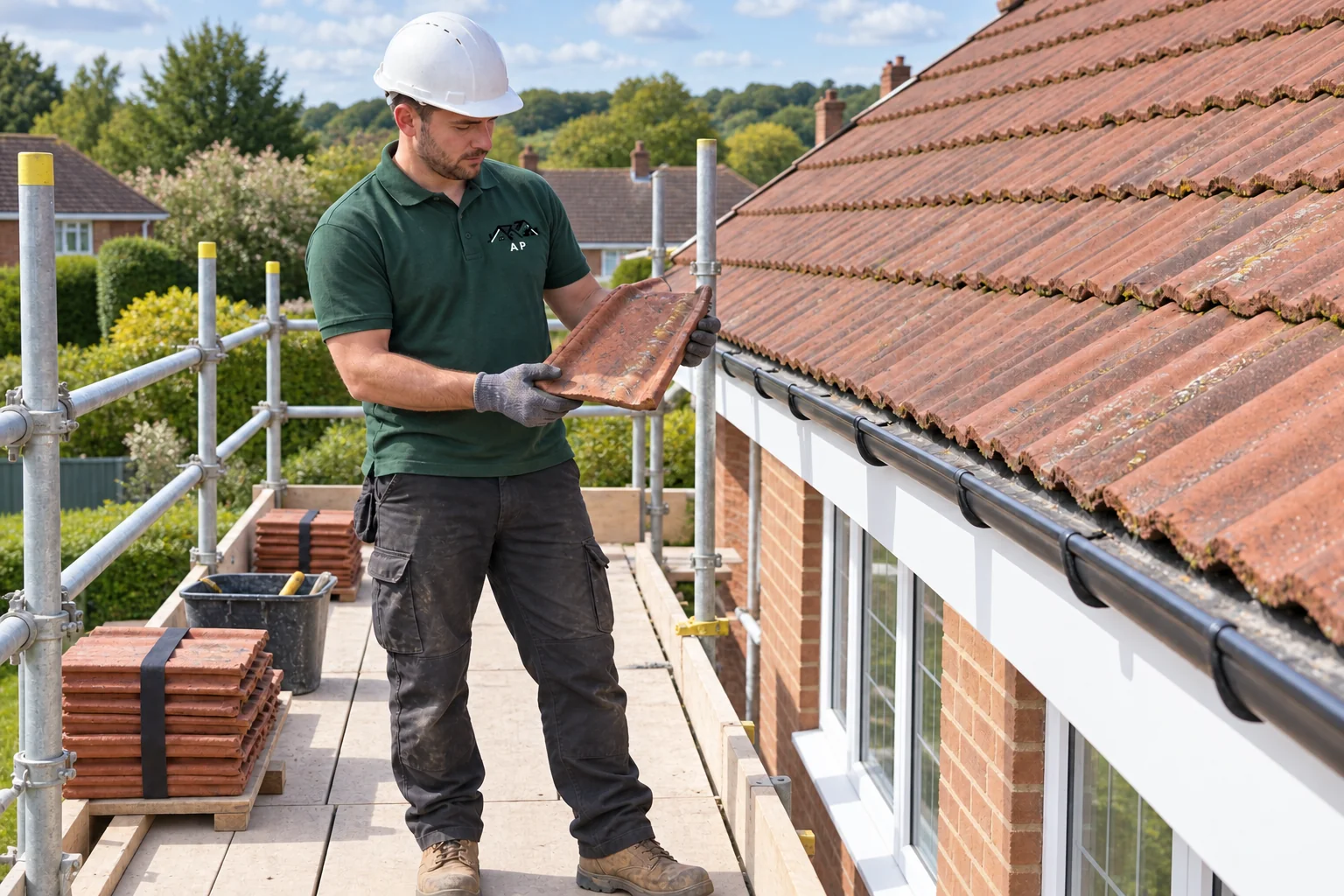
Ridges, hips, valleys and verges
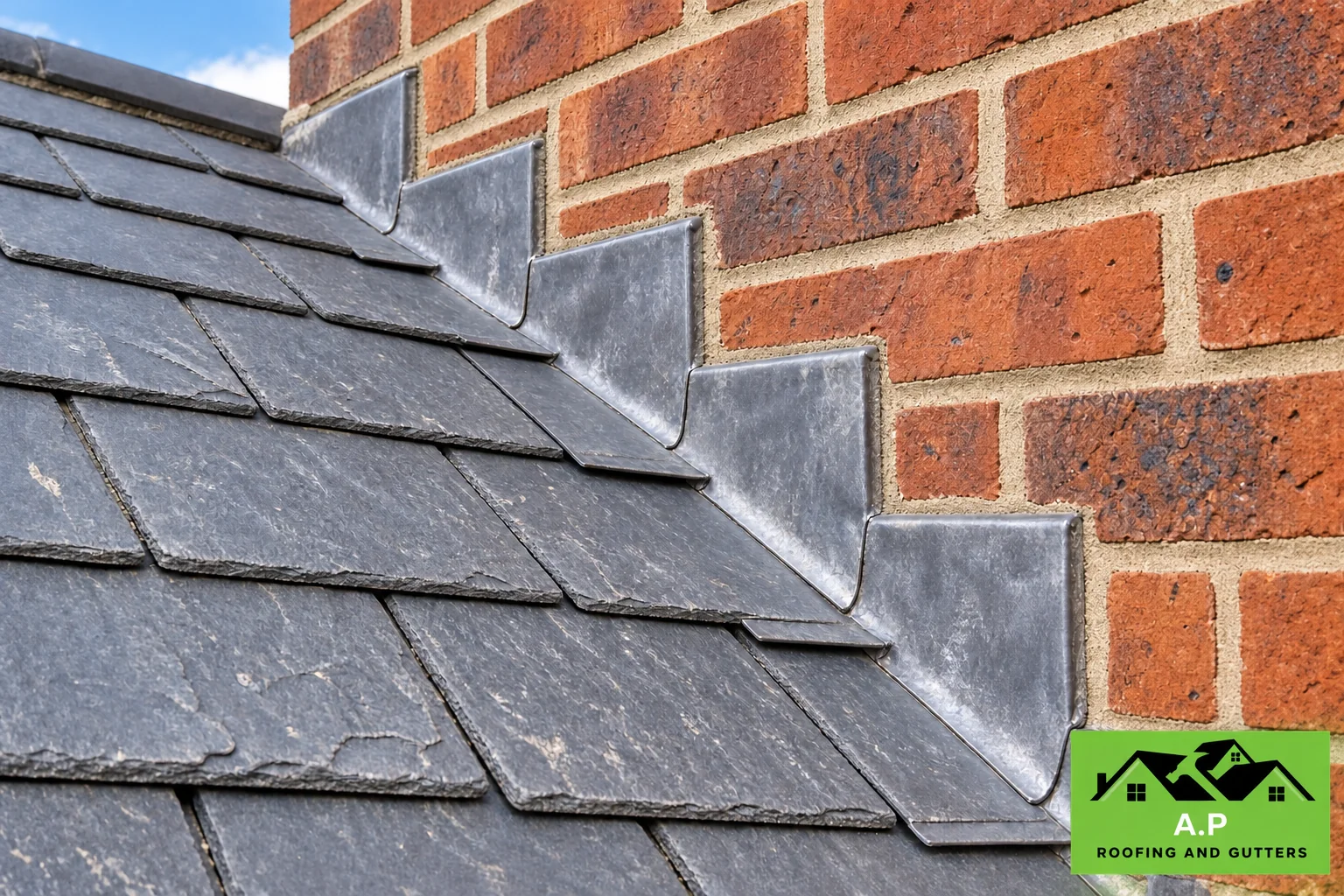
Tiles only work as a roof when the junctions are properly formed. Valleys carry concentrated water, ridges and hips need secure fixing, and verges are exposed to wind-driven rain.
During a reroof these details should be designed as part of the tile system rather than improvised at the end.
Cleaning and maintenance
Most tiled roofs need limited maintenance beyond replacing damaged units and keeping drainage clear. Tile manufacturers generally discourage high-pressure washing because it can damage surfaces and force water beneath laps.
Moss is assessed by condition and drainage impact rather than treated as proof the roof needs aggressive cleaning.
Choose a tile for the roof geometry
The pitch, slope length, exposure and supporting structure influence which tiles are suitable. Some profiles work at lower pitches under specified conditions, while others require steeper roofs and different laps. A tile sample tells you about appearance but not the full installation requirements. For replacement work, we consider how the selected profile meets the ridge, verge and eaves and whether a change in covering affects the load on the existing structure.
Diagnose repeated cracking or movement
Several broken tiles in the same area may result from foot traffic, a local support problem or movement around a roof junction. Replacing each one without checking the pattern can lead to repeat call-outs. The battens and fixing arrangement need to be sound, and the replacement must fit the existing courses. Where a discontinued profile is involved, sourcing compatible reclaimed stock or renewing a defined section can be more sensible than forcing a near-match into place.
A consistent finish from eaves to ridge
A tiled roof should read as a complete elevation, with regular courses and tidy transitions around openings. The ridge and verge system should suit the covering and the building. During handover, keep the tile profile and colour information together with any component details, so a future repair does not start again with an uncertain visual match.
Questions homeowners often ask
Profile, dimensions, interlock shape and manufacturer marks can help. A photograph of the roof and any spare tile is useful when matching repairs.
Yes, surface colour can weather over time. That does not automatically mean the structural tile has failed.
Not as a routine requirement. Coatings should not be used to disguise defective tiles or poor weathering details, and compatibility needs checking.
The structural implications should be checked before materially increasing covering weight.
Technical guidance and further reading
What affects the size and cost of the job?
Pitched-roof work is affected by roof size and pitch, but the number of valleys, hips, chimneys, rooflights and party-wall junctions can matter just as much. Matching an older tile or slate can also change material availability and labour.
- Roof area, pitch and number of slopes
- Tile or slate type and availability of compatible replacements
- Valleys, ridges, hips, verges, chimneys and rooflights
- Condition of battens, underlay and accessible timber
- Scaffolding, access and protection of lower roofs or conservatories
- Extent of local repair versus opening a larger area
A quote you can actually compare
A clear quote should say which coverings are being removed or retained, how the damaged area will be accessed, what happens to underlay or battens if found defective, and how key junctions will be weathered. That is more useful than comparing only the bottom-line number.
We prefer defined scopes to vague allowances. If an important part of the roof cannot be confirmed until material is lifted, that uncertainty should be explained before work begins rather than appearing as a surprise at the end.
What we inspect and work on
Clay tile roofing
Concrete tile roofing
Broken tile repairs
Full tiled reroofing
Ridge, verge and valley details
Related roofing services
More questions about this service
Do concrete tiles absorb water as they age?
Surface weathering and moisture behaviour vary by product and condition. Appearance alone is not enough to judge failure. Cracking, damaged edges, laps and the overall roof performance need assessment.
Can clay and concrete tiles be mixed on one slope?
Only where a suitable designed detail and compatible products allow it. They should not be mixed casually because profile, gauge, weight and fixing requirements can differ.