
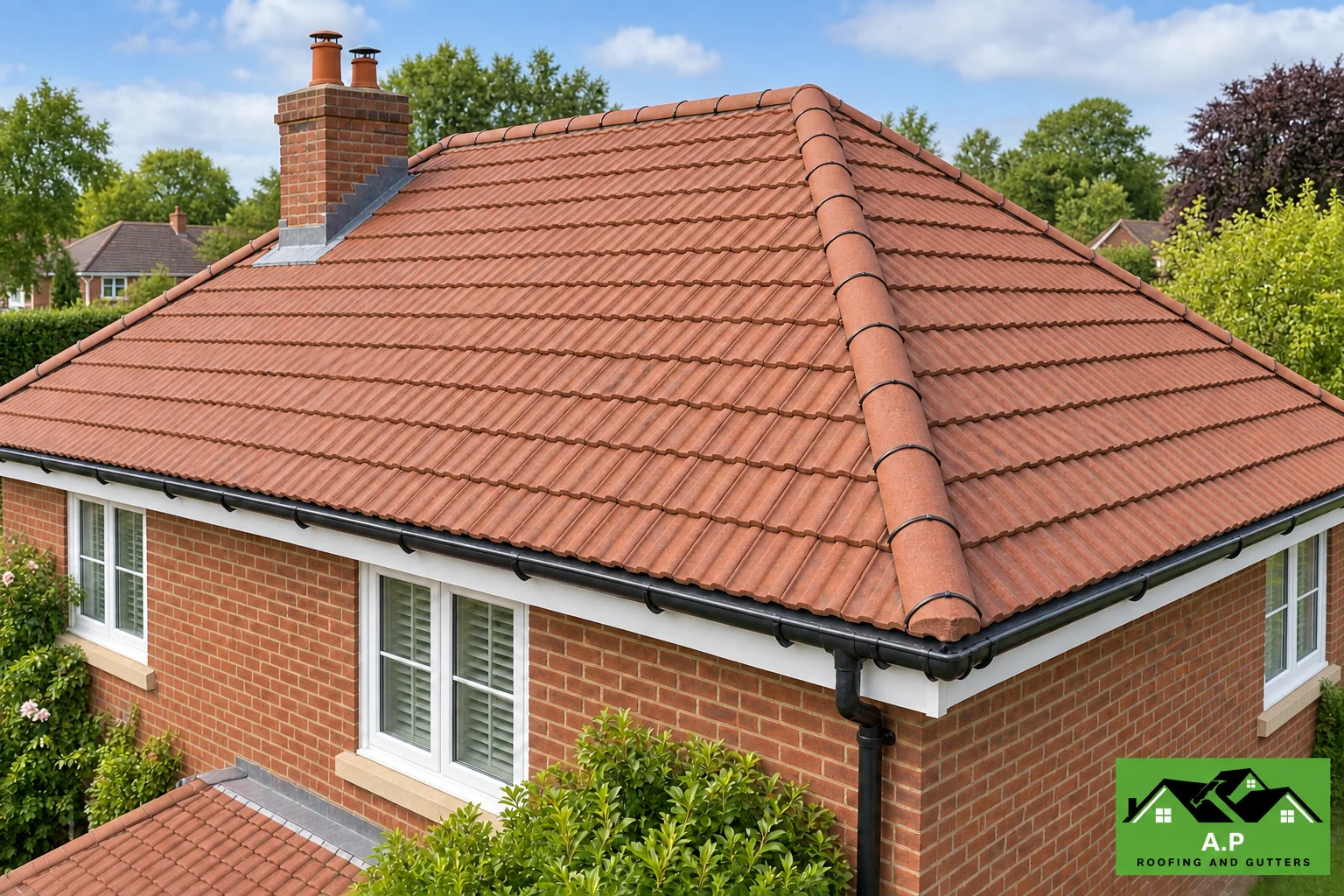
From one slipped tile to a tired roof that needs stripping back and rebuilding, we use compatible materials and tidy detailing so the repair looks right as well as keeping the weather out.
A pitched roof is a layered weathering system. Tiles or slates take most of the rain, but battens, underlay, fixings, ridges, valleys, verges, leadwork and ventilation all help the roof perform. That is why a single damp patch can have several possible causes.
We repair and renew pitched roofs across Crawley and nearby areas, from a handful of storm-damaged tiles to complete tiled or slate reroofing. The focus is always the same: identify the route of water, preserve sound material where practical and rebuild failing details so they work with the rest of the roof.
What we inspect on a tiled or slate roof
We look beyond the obvious broken tile. The condition and alignment of the surrounding covering, ridge and hip details, valleys, flashings, underlay, roof penetrations and eaves can all affect where water goes. In the loft, staining, daylight, damp insulation and condensation patterns can help separate a weather leak from a moisture problem.
Older roofs may also have several generations of repair. Mortar patches, silicone around flashings or mixed tile profiles can hide the original defect, so the diagnosis has to take account of previous work.
Tiles, slates, battens and fixings
Modern pitched-roof work is not just about hanging a covering on timber. Tile or slate choice has to suit the pitch and exposure, while battens, headlap and mechanical fixing have to resist weather and wind uplift. On replacement roofs we review the whole build-up rather than simply copying an old detail that may no longer be appropriate.
When repairing, matching the profile and size matters. A tile that almost fits can leave poor interlocks or awkward coursing that creates a new weak point.
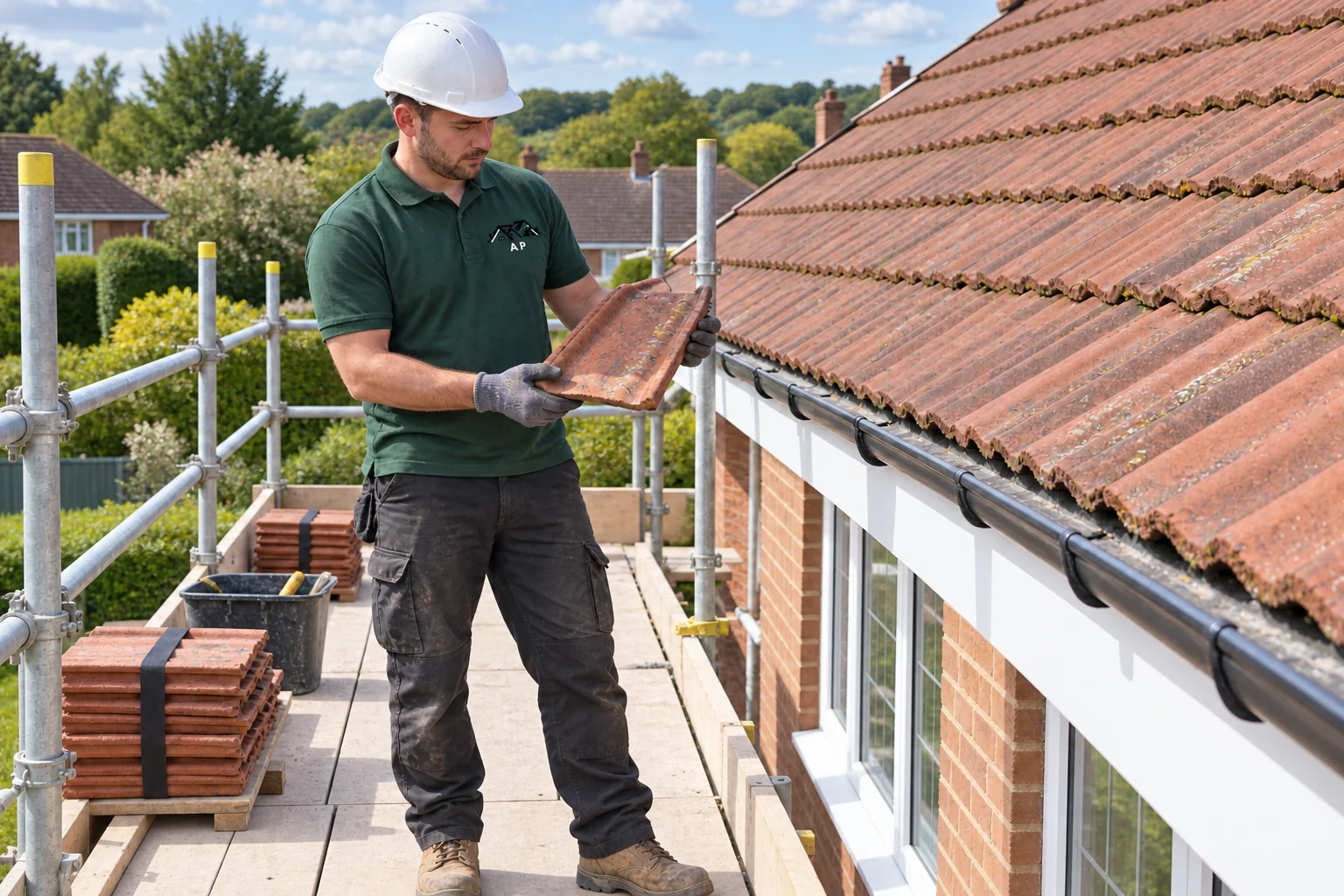
Ridges, hips, verges and valleys
The changes of direction on a pitched roof deserve special attention. Valleys carry concentrated water, verges are exposed to wind and rain, and ridge or hip details have to remain secure while allowing the roof below to perform normally.
Loose mortar is only one possible issue. We check the tile, fixing and underlying support as well, because repointing onto unstable material will not turn it into a durable repair.
Ventilation and insulation
A cold loft can develop condensation if warm moist air reaches the roof space faster than it can be managed. Insulation upgrades can make that more noticeable by changing air movement and roof-space temperature.
Current NFRC guidance points back to recognised ventilation strategies and British Standards rather than improvised fixes. On a reroof or insulation job we look at the eaves, underlay and high-level ventilation strategy as part of the roof, not as separate accessories.
Repair, reuse or reroof?
A sound older roof should not be stripped simply because it is old. Local slipped slates, failed flashings and isolated tile damage can often be repaired. Historic England makes the same point for older buildings: investigate repairable defects before assuming wholesale renewal is necessary.
Reroofing becomes more logical when failures are widespread, battens or underlay are badly deteriorated, fixings are repeatedly failing, or the cost of repeated access and patching is approaching the cost of planned replacement.
Assess the whole slope before selecting a repair
A roof may contain more than one generation of tile, underlay and ridge work. We look at the pattern of defects rather than treating every cracked unit separately. Local impact damage on an otherwise sound slope calls for a different response from repeated slipping caused by weak battens or corroded fixings. Roof windows, solar brackets and later extensions can introduce junctions that did not exist when the original covering was laid. Those changes need to be understood when tracing a leak.
Retaining the character of the building
Tile shape and slate size affect the roof’s proportions as well as its performance. A replacement specification should consider the ridge, verge and eaves details together with the main covering. Reusing sound material can be worthwhile where matching matters, but sorting, breakage and supply of replacements need to be allowed for. On attached properties, the transition to the neighbouring roof needs a deliberate detail. Changing one half of a shared roof should not leave an awkward gap or an incompatible junction at the boundary.
Planning work around the household
Scaffolding, deliveries and strip-off need to be planned around access to the house. Tell us about conservatories, loft storage, aerials and solar panels before the survey. The quotation should identify the layers being replaced, any timber assumptions and the approach to weather protection, so the work can progress without leaving important decisions until the covering is removed.
Questions homeowners often ask
Wind-driven rain can push water into laps, abutments, valleys and flashings that remain dry in ordinary vertical rain. The direction and weather conditions are useful diagnostic clues.
Yes, where the surrounding roof is sound and a compatible replacement is available. A local repair is often the right response to isolated damage.
No. Modern dry ridge systems are common, while traditional mortar-bedded details remain on many existing roofs. The appropriate repair depends on the roof, the existing detail and its condition.
It is often an opportunity to review insulation, ventilation and thermal performance, but the exact work needed depends on the roof build-up and Building Regulations requirements.
Technical guidance and further reading
What affects the size and cost of the job?
Pitched-roof work is affected by roof size and pitch, but the number of valleys, hips, chimneys, rooflights and party-wall junctions can matter just as much. Matching an older tile or slate can also change material availability and labour.
- Roof area, pitch and number of slopes
- Tile or slate type and availability of compatible replacements
- Valleys, ridges, hips, verges, chimneys and rooflights
- Condition of battens, underlay and accessible timber
- Scaffolding, access and protection of lower roofs or conservatories
- Extent of local repair versus opening a larger area
A quote you can actually compare
A clear quote should say which coverings are being removed or retained, how the damaged area will be accessed, what happens to underlay or battens if found defective, and how key junctions will be weathered. That is more useful than comparing only the bottom-line number.
We prefer defined scopes to vague allowances. If an important part of the roof cannot be confirmed until material is lifted, that uncertainty should be explained before work begins rather than appearing as a surprise at the end.
What this service covers
Tile and slate repairs
Ridge, hip and verge work
Valley repairs
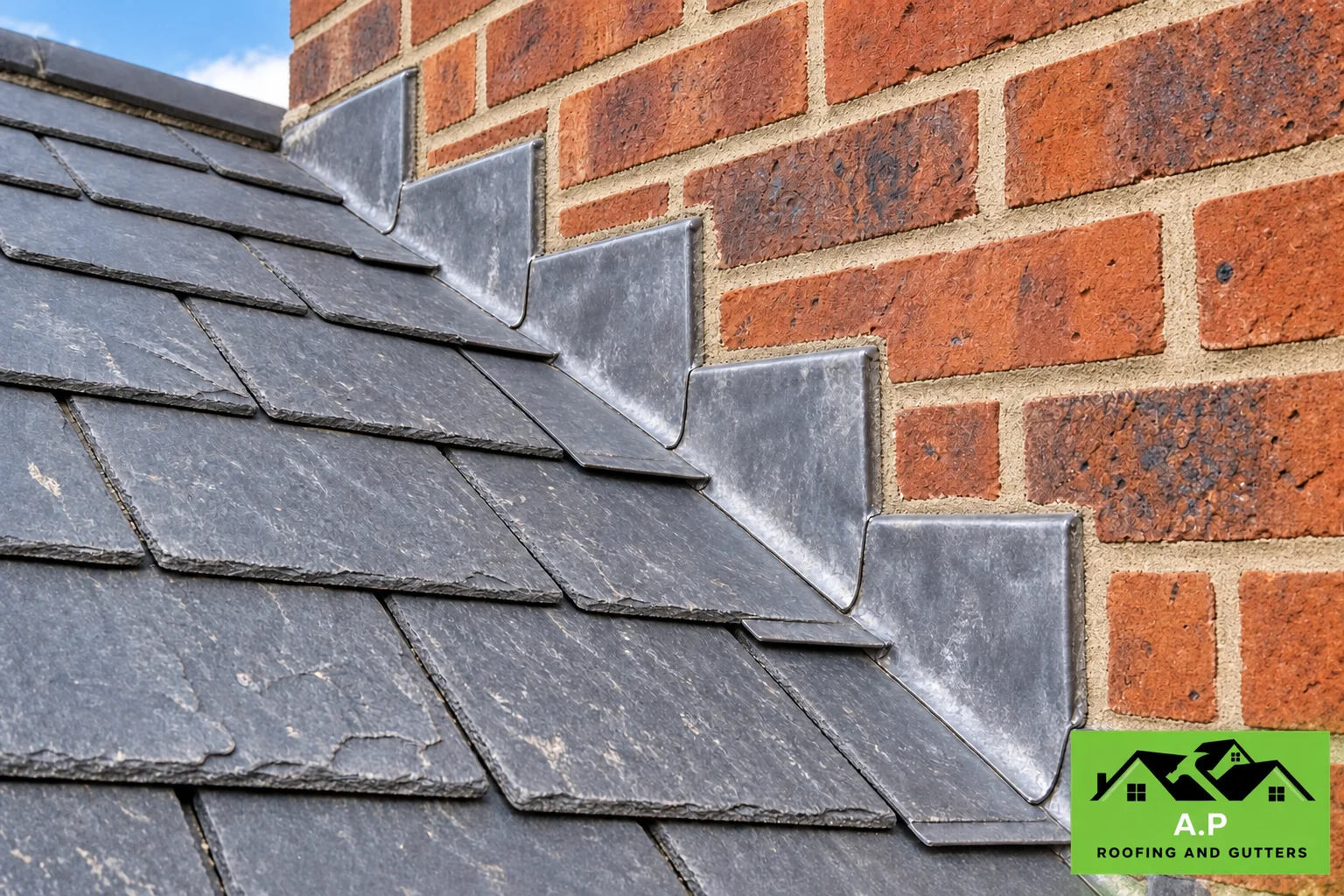
Lead flashing and abutments
New tiled and slate roofs
Ventilation and insulation improvements
Signs it is worth getting the roof checked
Roof problems do not always arrive as a dramatic leak. These are common clues that the relevant part of the roof needs a closer look:
- Slipped, cracked or missing tiles
- Loose ridge or hip tiles
- Daylight visible in the loft
- Damp after wind-driven rain
- Mortar falling from verges or ridge lines
Related services and deeper guides
More questions about this service
Is damaged underlay enough reason for a new roof?
It depends on the extent, roof covering and supporting layers. Local damage may be repairable. Widespread brittle underlay combined with failing battens or coverings can make planned renewal more sensible.
Can a roof stay occupied underneath during work?
Many domestic reroofing jobs are planned around an occupied home. Access, noise, temporary weathering and any internal restrictions must be agreed for the individual property.