
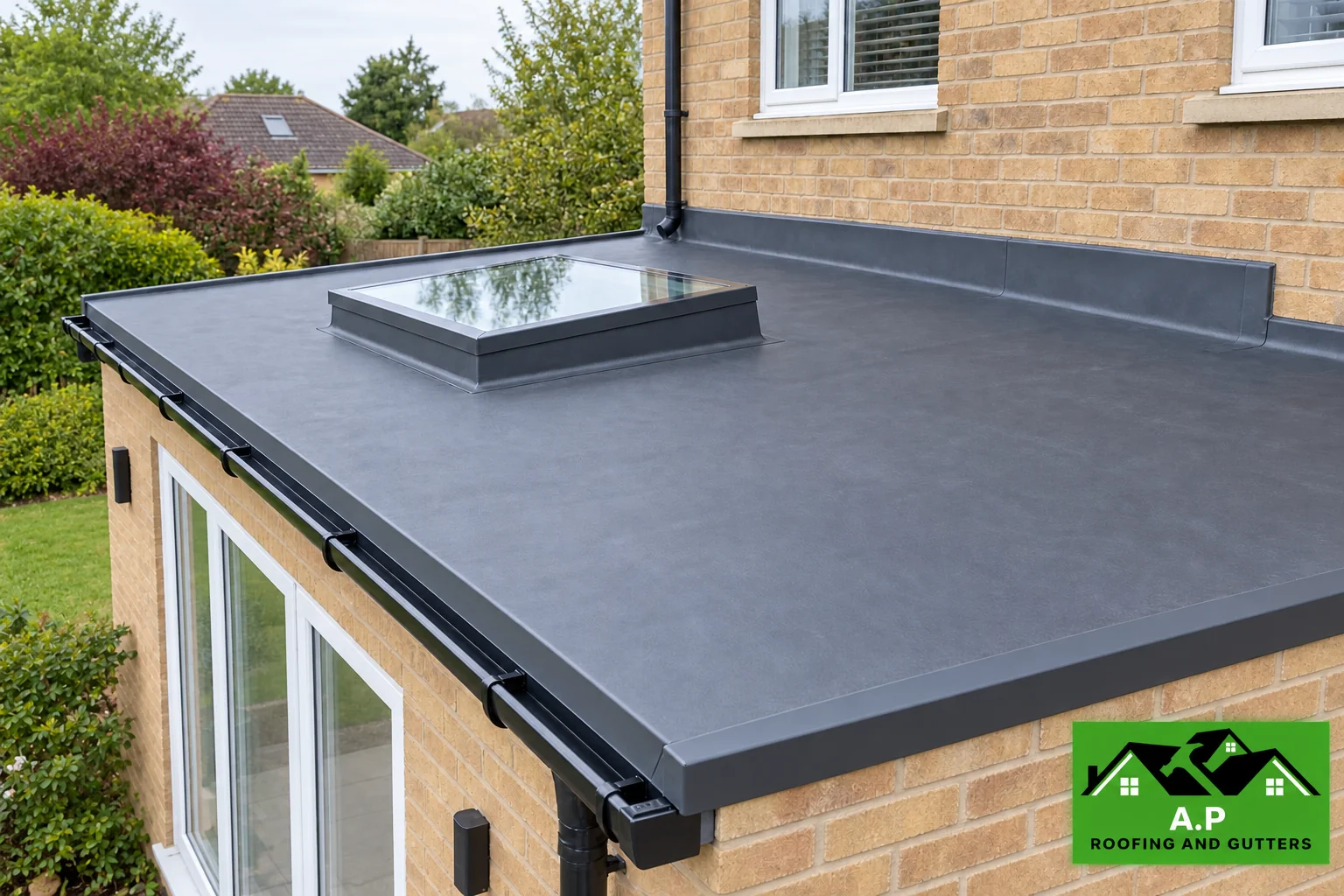
Flat roof repair is most successful when the defect is genuinely local. A puncture, open seam, failed trim or damaged outlet can often be repaired; a membrane that has become brittle across the whole area cannot be made young again with another tube of sealant.
We inspect the covering, substrate and drainage around the problem so the proposed flat roof repair has a realistic chance of lasting.
Common causes of flat roof leaks
Typical defects include splits at movement points, punctures, poorly bonded laps, damaged edge trims, failed upstands, blocked outlets and water entering around rooflights or service penetrations. On older felt roofs, surface cracking and blistering can indicate broader ageing.
The leak indoors may appear away from the actual defect because water can travel within the build-up before finding a route through the ceiling.
Checking whether the deck is still sound
A soft or deflected deck changes the repair decision. If the waterproofing has leaked long enough for timber or board beneath to deteriorate, the failed substrate needs dealing with rather than simply covering the surface again.
We probe suspicious areas and consider whether ponding or movement is a symptom of deck problems below.
Compatible repair materials
Not every sealant or liquid coating bonds safely to every membrane. We identify the existing system where possible and use compatible repair materials rather than creating an unknown chemical sandwich.
This is particularly important on roofs with previous patches, where different materials may already be layered over one another.
When an overlay can make sense
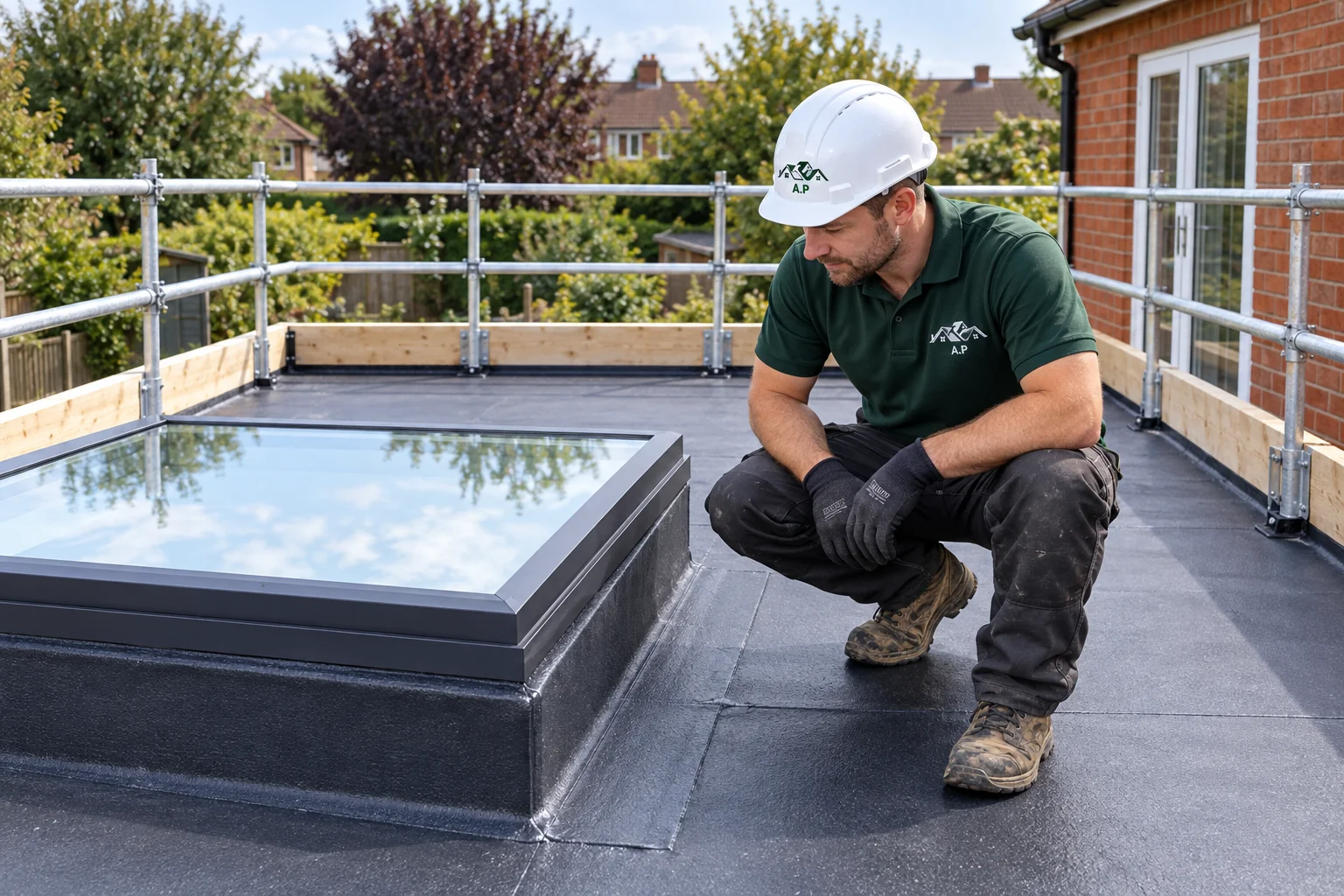
Some flat roofs can be prepared and overlaid rather than fully stripped, but only when the existing build-up is suitable. Moisture, adhesion, deck condition, insulation and roof-edge heights all need checking first.
An overlay should be a designed refurbishment method, not a way of hiding a wet or unstable roof.
Repairing drainage as well as waterproofing
If the failure is caused by water repeatedly sitting against an upstand or outlet, sealing the split without addressing drainage can reproduce the same problem. We look at how the roof empties and whether the outlet, fall or edge needs adjustment as part of the repair.
Find sound material around the failure
A reliable patch needs more than an intact-looking edge around a split. The surrounding membrane must be capable of being cleaned and bonded, and the deck below must support the repair. If moisture has spread within insulation, the repair area may be larger than the visible mark. On roofs with several old coatings, compatibility can be difficult to establish. We assess whether a local repair restores a usable detail or simply puts another material over an uncertain build-up.
Edges and rooflights deserve a closer look
Leaks often occur where the main covering changes direction. A lifted edge trim, failed rooflight corner or loose wall termination can admit water despite a sound central field. The repair may need to rebuild that junction rather than cover it with liquid sealant. Where standing water reaches the same edge after every rainfall, drainage should be reviewed at the same time. If the roof has an existing guarantee, bring the paperwork so the proposed repair can be checked against the system requirements.
After a local flat-roof repair
Keep an eye on the original internal stain during subsequent rain without accessing the roof yourself. Drying may take time, but fresh water or an expanding mark should be reported. A permanent repair to one defect does not renew an ageing roof elsewhere, so we explain any remaining areas that need monitoring or planned replacement.
Questions homeowners often ask
Yes where the felt and deck around the defect remain serviceable. If the covering is extensively cracked, brittle or blistered, replacement may be better value.
Often the likely defect can be identified from the surface and internal evidence. If moisture is trapped within layers, selective opening-up may be needed to confirm the condition below.
Some liquid systems are designed for refurbishment, but generic coating over an unknown or poorly prepared roof is not the same thing. Substrate preparation, compatibility and detailing are crucial.
Technical guidance and further reading
What affects the size and cost of the job?
Flat-roof quotes are shaped by more than square metres. Roof shape, the number of outlets and penetrations, deck condition, insulation, perimeter upstands and how easily materials can be moved to the work area all affect the scope.
- Roof area and number of separate roof zones
- Condition of the deck and whether wet material must be removed
- Waterproofing system and preparation required
- Outlets, rooflights, wall abutments and awkward perimeter details
- Insulation or vapour-control upgrades
- Safe access, edge protection and waste removal
A quote you can actually compare
A useful flat-roof quote should identify the proposed system and, where relevant, the deck preparation, insulation build-up, outlet work, perimeter details and treatment of existing material. A single line saying “new flat roof” makes it difficult to compare two very different specifications.
We prefer defined scopes to vague allowances. If an important part of the roof cannot be confirmed until material is lifted, that uncertainty should be explained before work begins rather than appearing as a surprise at the end.
What we inspect and work on
Split and puncture repairs
Failed lap and seam repairs
Perimeter and upstand repairs
Outlet and drainage repairs
Local overlay or patch systems where suitable
Related roofing services
More questions about this service
Can you patch EPDM with ordinary roofing felt?
A repair should use a method compatible with the existing membrane. Different waterproofing products cannot be assumed to bond or move together correctly. Identifying the system is part of choosing the repair.
Why is the ceiling still stained after repair?
An old stain can remain after the roof is watertight, and damp materials may take time to dry. New dripping or an enlarging wet area is different and needs investigation before redecorating.