In this guide
The chimney, its roof junction and the internal damp pattern need to be assessed together. Flashing is one part of the investigation, rather than an automatic diagnosis.
First establish when the mark changes
Does fresh damp appear during rain, after prolonged wet weather or on cold days without rain? Is it above a fireplace, at ceiling level or along the side of the chimney breast? Photograph the position and note whether the chimney is used, redundant or has recently been altered.
Rainwater entry, condensation and old staining can look similar from inside. Salts and previous moisture damage can complicate the appearance of chimney plaster. An inspection needs to distinguish current water entry from the remaining effects of an older problem before internal repairs are planned.
The roof junction has several separate jobs
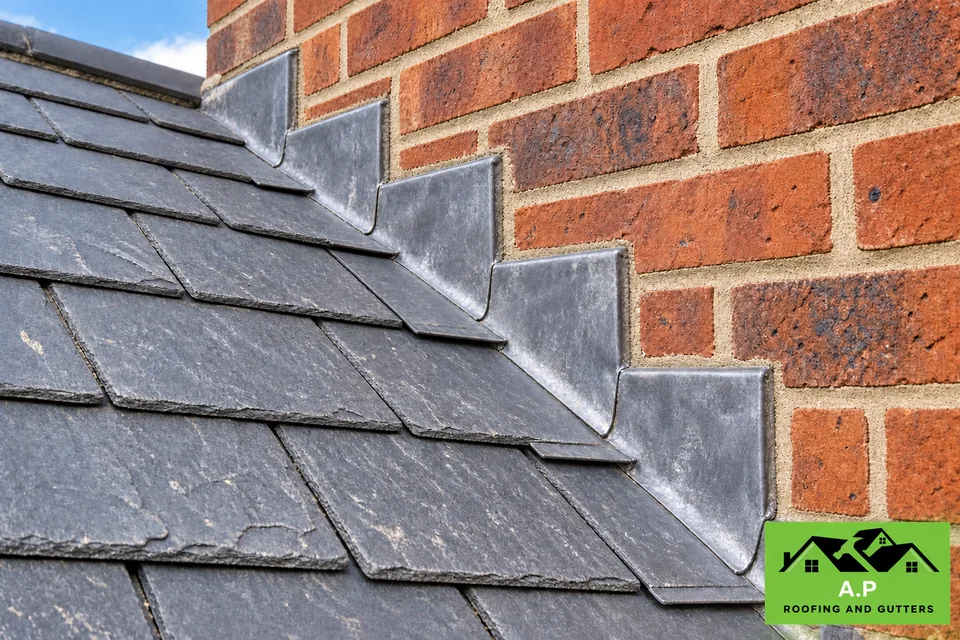
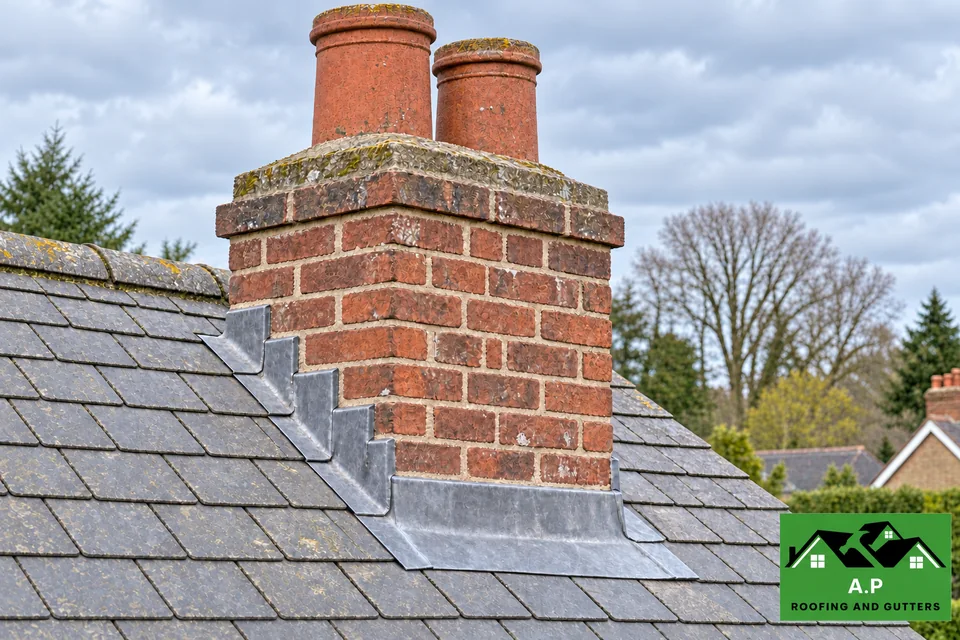
At a typical pitched roof, the weathering around the chimney needs to shed water from above, cover the sides and discharge onto the lower roof. Depending on the construction, this may involve side soakers, stepped cover flashing, an apron and a back gutter.
A split, poor overlap, loose fixing or failed junction can be relevant. So can debris restricting the route behind the stack. The inspection should consider how the pieces work together and how the adjacent tiles or slates are arranged. A surface bead over one edge may leave another route untouched.
Look above the flashing too
The stack itself is exposed to the weather. Deteriorated mortar joints, damaged masonry and defects around the top can all deserve attention. Water entering higher up may travel through or around the chimney before appearing inside.
This does not mean every damp chimney needs repointing and new leadwork. It means the quotation should connect the evidence to the proposed work. If the condition cannot be judged properly from the available access, ask what closer inspection is needed rather than accepting a confident guess.
What to ask about the proposed repair
- Which defect is believed to admit water, and what supports that view?
- Does the scope include the back of the stack and adjoining covering?
- Will existing lead be retained, locally repaired or replaced, and why?
- Are masonry or top-of-stack repairs separate items?
- What cannot be confirmed until the area is safely accessed or opened?
Leadwork needs to accommodate the roof arrangement and material movement. An unexplained smear of sealant is not equivalent to rebuilding a failed detail. Conversely, a suitable specified sealant can be part of a correctly designed junction; the issue is the complete repair, not a blanket ban on one product.
A redundant chimney still needs a considered solution
If the chimney is no longer used, tell the contractor. Do not assume an unused flue should simply be sealed airtight or that removing a pot is an uncomplicated roofing job. Ventilation, remaining masonry, the roof junction and any structural work need appropriate consideration.
If an appliance is connected, make that clear before any work is specified. Roofing work does not replace the checks needed for the appliance and flue by the appropriate competent specialist. Keep the scope of each trade clear so a roof repair does not accidentally create a different problem.
Allow for the internal repair after the source is dealt with
A chimney breast may take time to dry, and stained or salt-affected finishes may need advice from a suitable building or decorating specialist. Painting immediately after external work can hide the evidence briefly without resolving the condition of the plaster.
Keep a record of new damp after rain, rather than judging only the old mark. If it changes, share the photographs and conditions with the roofer. Water may have more than one route, and follow-up investigation is more useful than applying another random surface patch.
AP Roofing Sussex carries out chimney roofing repairs in Crawley and leadwork. Send safe photographs of the internal mark and the outside of the property, with the postcode and the weather pattern. We can discuss inspection and a repair scope based on what is found.
Questions worth asking
Is every chimney leak caused by lead flashing?
No. The stack, back gutter, roof covering, masonry and top details can all be relevant. The damp pattern needs to be assessed before selecting a repair.
Will repointing cure a damp chimney breast?
Only if defective masonry joints are part of the actual cause and the repair is appropriate. Repointing does not correct a separate failed roof junction or a condensation problem.
Can you inspect behind the chimney from the ground?
A ground-level view may help identify concerns, but it cannot show every concealed or high-level detail. Safe closer access may be needed for a reliable assessment.
Ask about a chimney leak
Tell us what you have noticed and where the property is. We will discuss the next step and a free estimate for the roofing work.
Explore the repair service ↗General guidance for homeowners. The right repair depends on inspecting the individual roof. Keep checks at ground level unless there is safe, suitable access.