
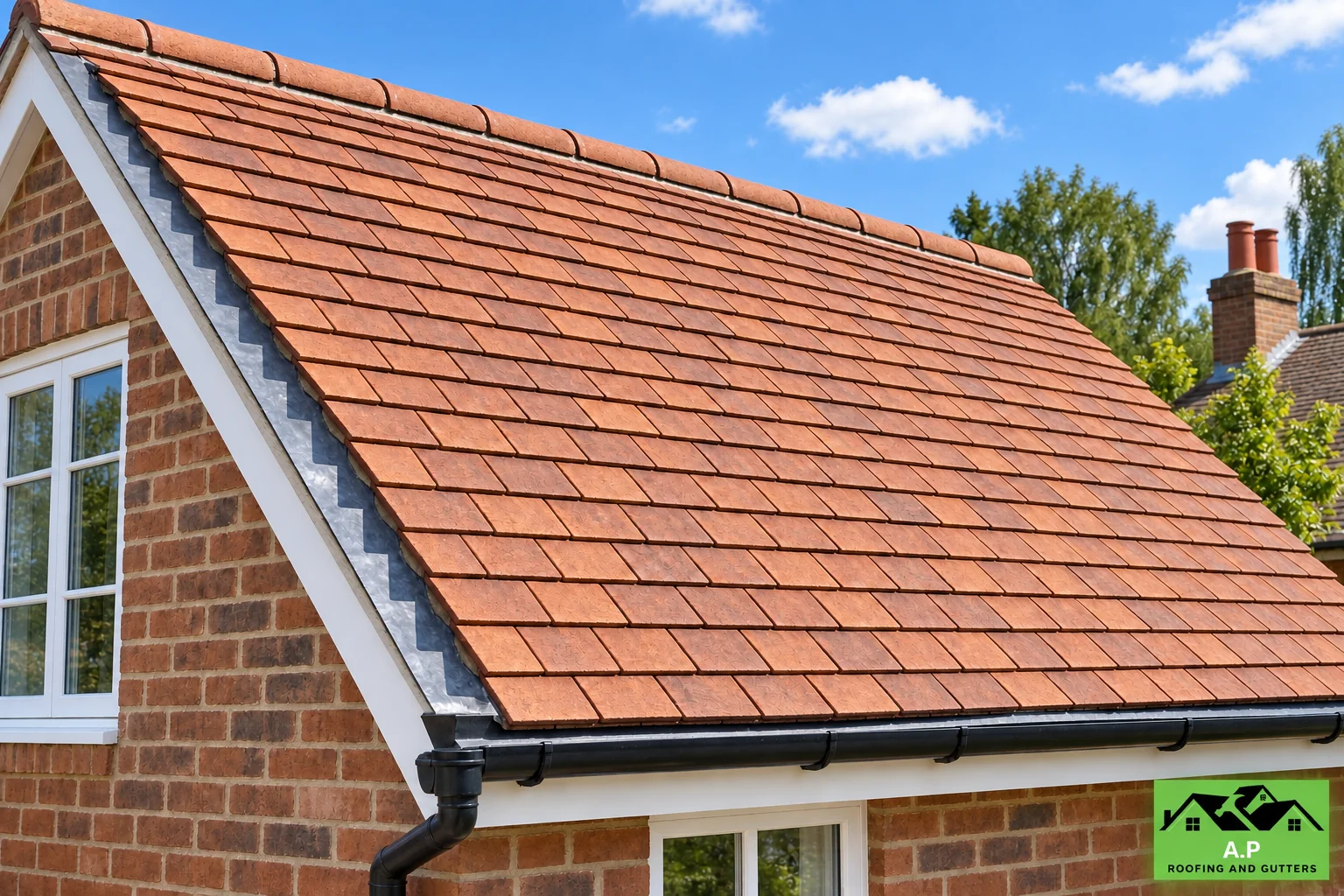
Choose roof tiles for their profile, pitch, fixing requirements and fit with the property, as well as their colour.
Material and profile are different decisions
Clay and concrete tiles are available in several forms. Small plain tiles create closely spaced courses, while larger interlocking units cover more area per tile and have shaped joints. Two tiles made from the same material may have very different installation requirements. The profile affects the appearance, batten gauge, roof details and labour involved.
The roof sets the specification
Pitch, slope length, exposure and supporting structure influence which covering is suitable. Manufacturer limits on pitch and headlap must be considered together with fixing requirements. A tile that works on one roof cannot automatically be transferred to a shallower or more exposed roof. Changing the covering may also change the load on the building, which needs assessment where relevant.
Matching tiles for a repair
A replacement should fit the existing profile, dimensions and fixing arrangement. A close colour match is not enough if the interlocks sit poorly or the course is distorted. Discontinued tiles may require suitable reclaimed stock or a larger defined repair area. New material can initially look brighter than a weathered roof, so expectations about appearance should be discussed before work begins.
The components around the tile
Battens, underlay, eaves support, ridge and verge systems and mechanical fixings all contribute to performance. Valleys and abutments need suitable cut tiles, support and weathering. A roof replacement should coordinate these parts rather than treat accessories as optional finishing touches. The quotation should explain which components are being retained or renewed.
Clay, concrete and the finished building
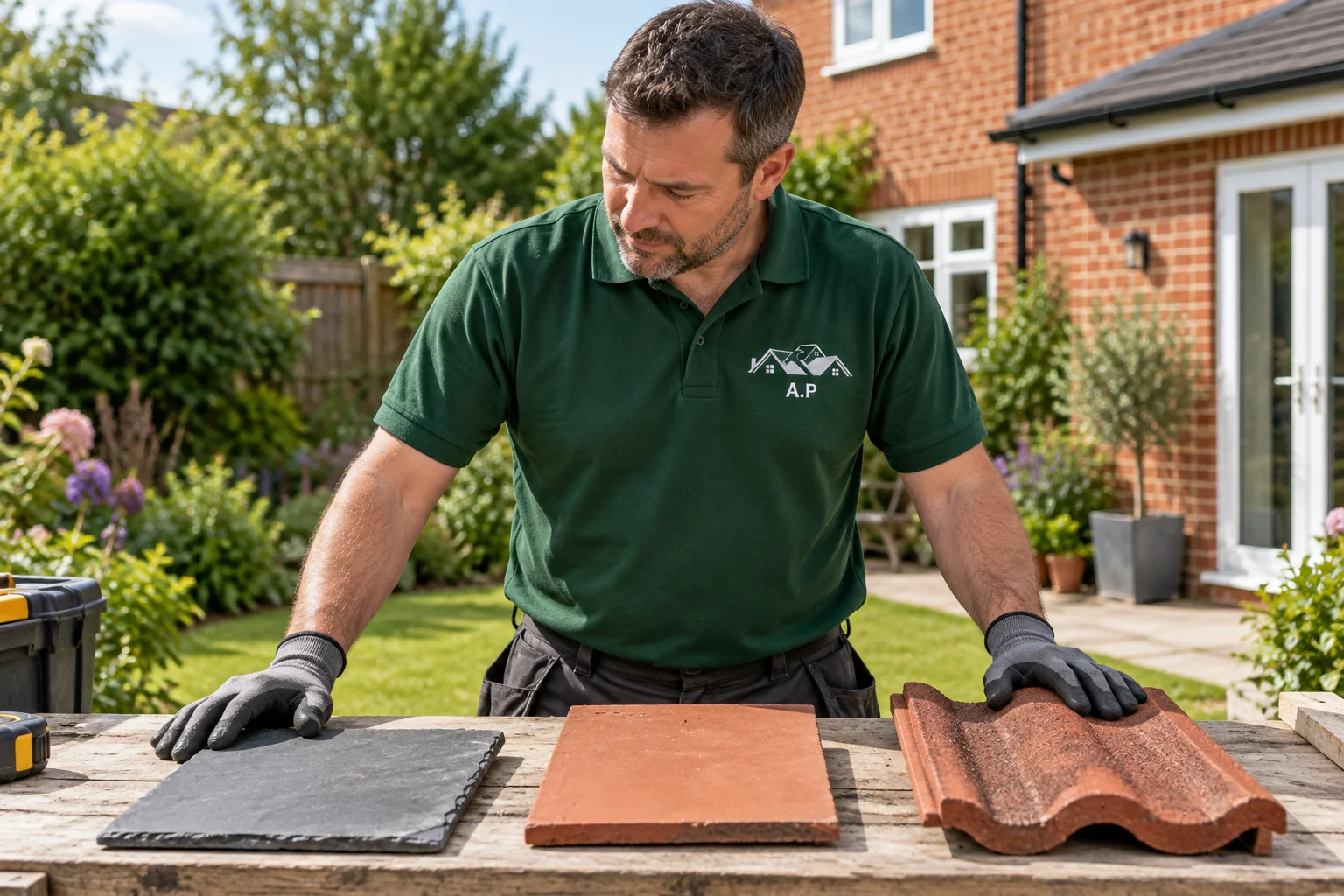
The right choice depends on the building and the result you want. Clay can offer a characteristic texture and colour, while concrete provides a wide range of profiles and finishes. Budget, availability and the roof’s structure also matter. Where a property is protected or a material change affects its character, establish the permission position before committing to a different covering.
Looking after tiled roofs
Replace damaged units promptly and keep drainage routes clear. Moss and surface weathering do not automatically mean the tiles have failed. Aggressive cleaning can damage a covering or force water beneath laps, so assess condition and use a method appropriate to the product. Keep the tile profile details after new work to simplify future repairs.