
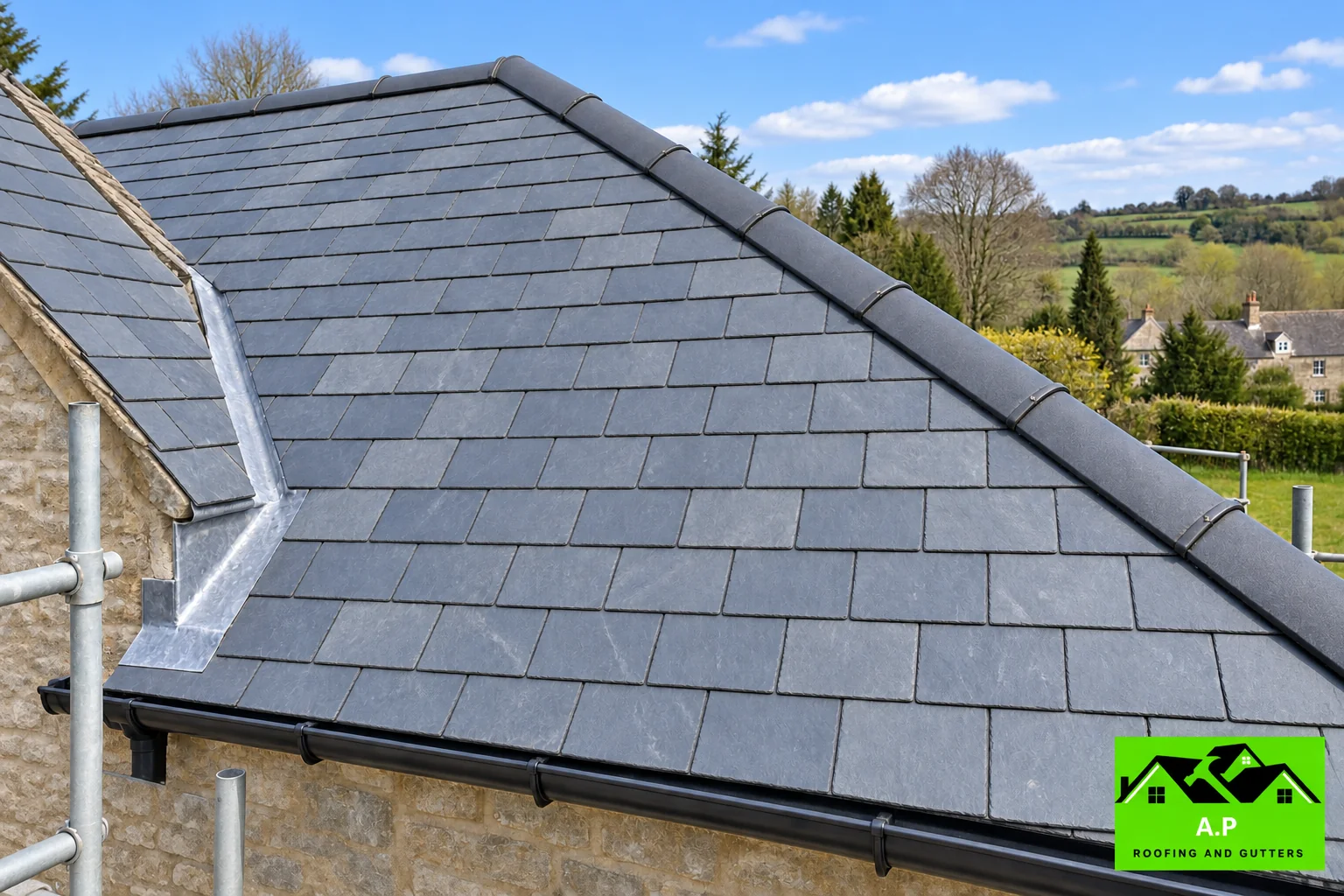
A durable, distinctive roof covering whose performance depends on slate quality, headlap, support and secure fixing.
Natural slate as a roof covering
Slate is split into thin units and laid in overlapping courses. Its texture and variation contribute to the appearance of many older roofs, while newly specified slate can also suit contemporary work. Slate is not one uniform product: size, thickness and material characteristics vary. The chosen slate should suit the roof pitch, exposure and intended detail.
Headlap and fixing
The overlap between courses helps shed water, and the fixing method holds the slates securely without damaging them. The design must account for pitch, roof length and exposure. Slates that are too tightly fixed or poorly supported can be stressed, while unsuitable laps can compromise weathering. Product and design guidance should govern the specification rather than copying an existing detail without checking it.
Repairing slipped or broken slates
A few damaged units may be replaced while the surrounding roof remains in service. The repair needs a suitable slate and secure fixing method without breaking adjacent material. Repeated slipping can result from deteriorated nails or battens even where the slate itself remains sound. That distinction helps determine whether local repair or relaying a larger area is worthwhile.
Salvage and reuse
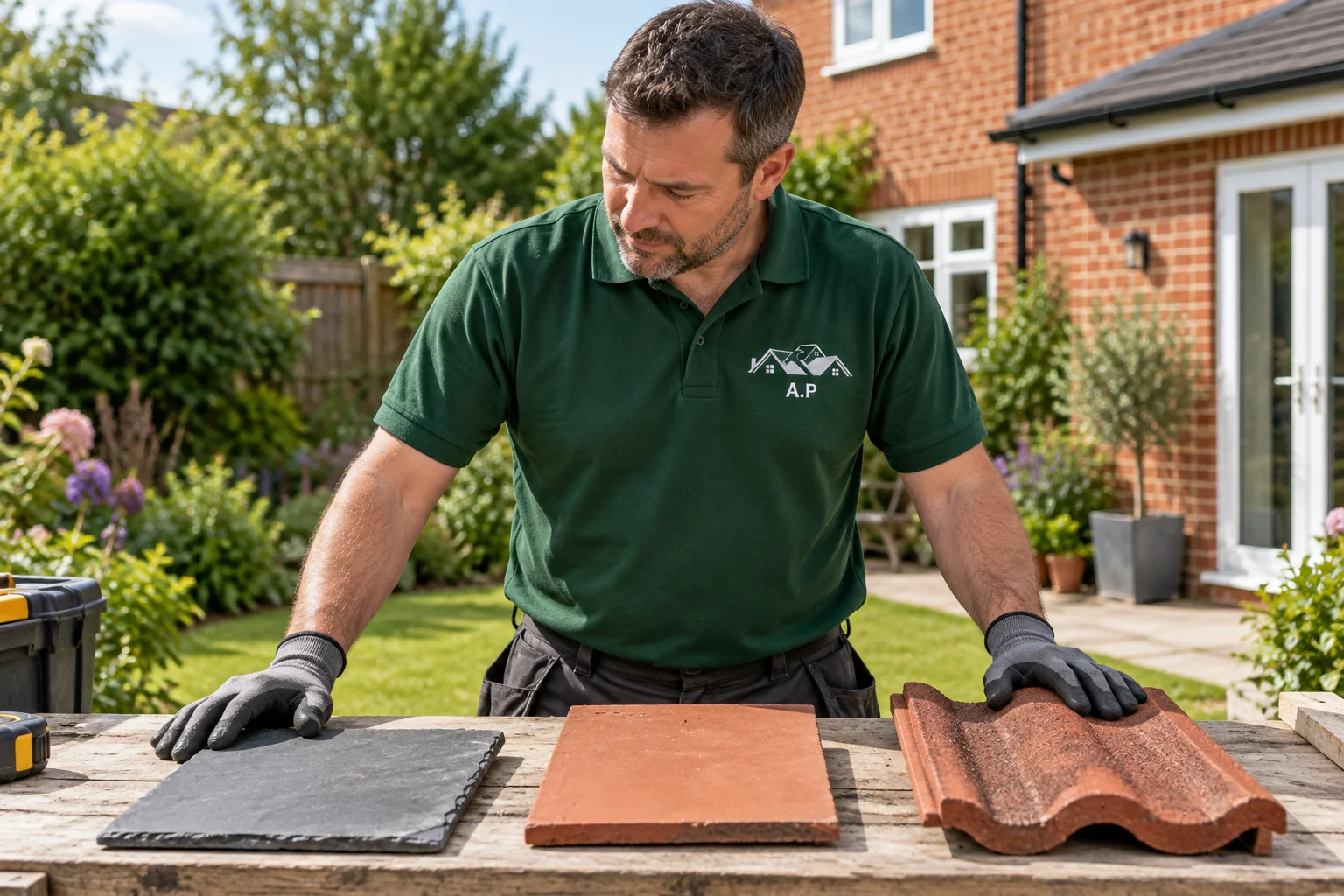
Sound slate may be retained during a reroof after sorting and assessment. Breakage and unsuitable pieces need to be allowed for, with compatible replacements sourced to make up the quantity. Reuse can preserve the roof’s character, but it still requires new work beneath and appropriate fixing. The economics should include the labour involved in careful removal and sorting.
Natural slate versus fibre cement
Manufactured fibre-cement products are a different material with their own dimensions, fixing rules and appearance. They should be specified transparently rather than described as identical to natural slate. A change may affect the look and loading of a roof and can need additional consideration on a protected building.
Junctions and long-term care
Lead valleys, chimneys, ridge details and drainage deserve attention alongside the slate field. Keep records of the material and repair method used. Avoid unnecessary roof traffic and aggressive cleaning, particularly where the covering is fragile. A roof can retain useful life through well-judged repairs without every weathered slate being replaced.