
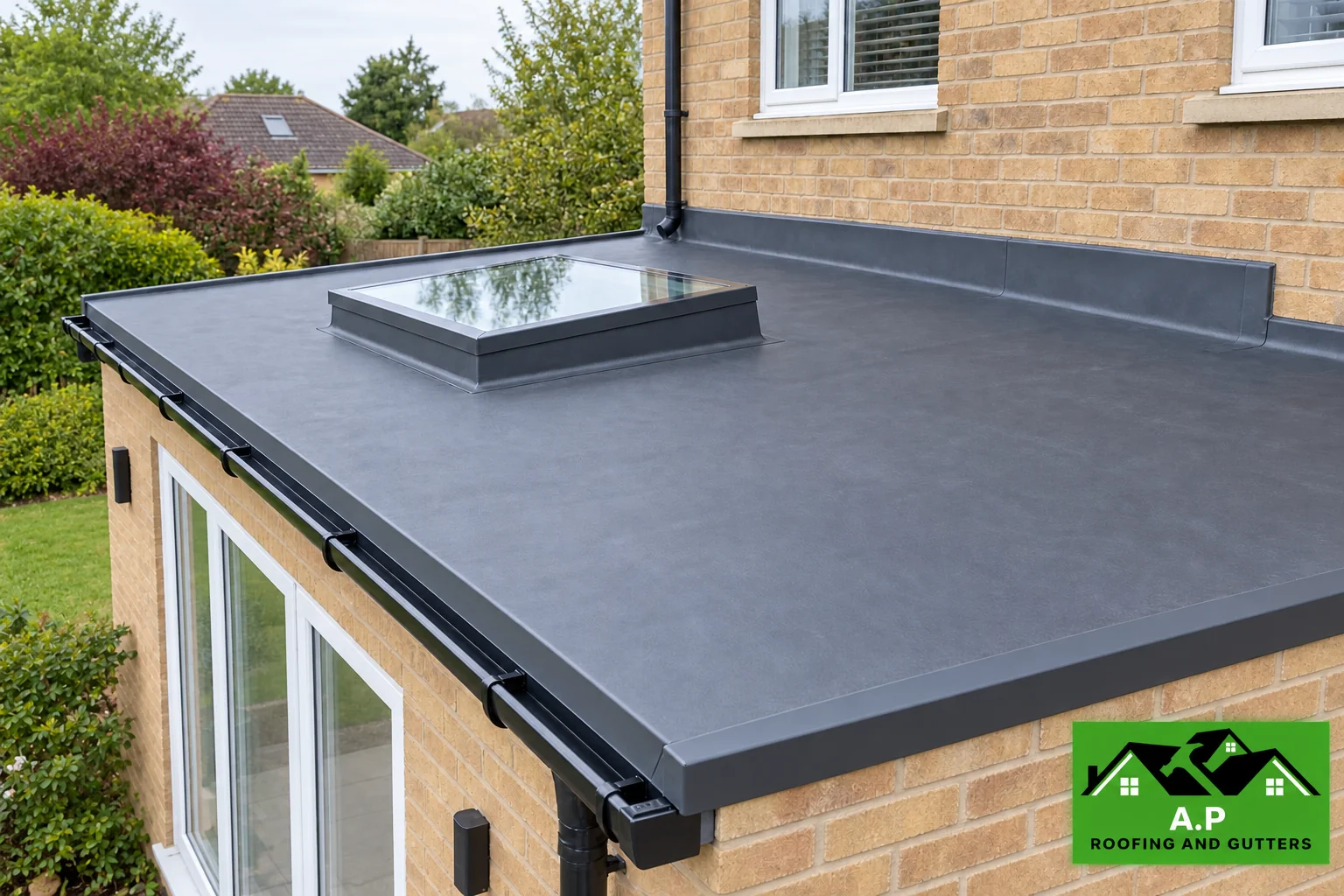
Punctures are most common on flat membranes and sheeted roofs where foot traffic, dropped tools, fixings or later building work physically damages the waterproofing. Holes can also appear around removed aerials, redundant pipes and poorly sealed penetrations.
A durable repair needs compatible material and enough sound substrate around the damage to form a reliable patch or replacement detail.
Finding the full extent of the damage
The visible hole can be smaller than the wet area below it. Water may spread within insulation or along the deck, so we check for softness, trapped moisture and damage around the penetration rather than sizing the repair only to the surface mark.
If damage was caused by another trade, nearby fixings and cable routes are also worth checking.
Membrane punctures
EPDM, single-ply, felt and liquid systems each have their own compatible repair method. Cleaning and preparation are essential because a patch that bonds to dirt or an incompatible coating will fail at the edge.
Where the membrane has been stretched or the deck damaged, the repair area may need to be larger than the puncture itself.
Redundant penetrations
Old pipes, aerial posts and cables should be removed or weathered as deliberate details. Filling a hole with general-purpose sealant leaves a rigid plug in a roof that moves with temperature.
A proper repair restores the waterproofing layer and support beneath it so future movement is accommodated.
Preventing repeat damage
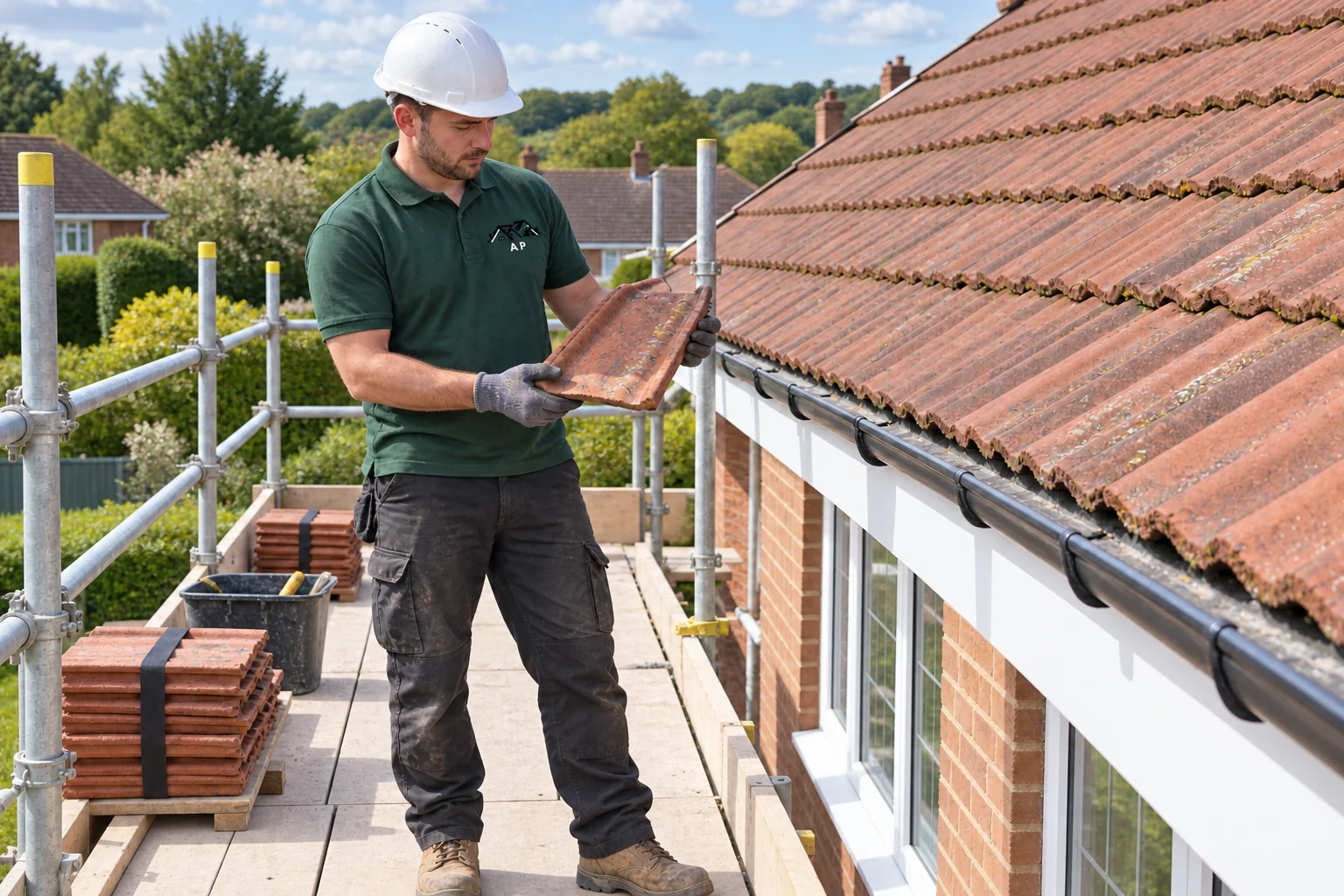
If maintenance staff regularly cross a flat roof, protection pads, designated walkways or a different access route may reduce future punctures. A waterproof membrane should not be expected to behave like a workshop floor.
For commercial roofs, the maintenance route is worth considering at the same time as the repair.
Repair the support as well as the opening
A puncture caused by a dropped object can damage the deck beneath a membrane. A redundant pipe may leave an unsupported hole once removed. Covering either defect with a flexible patch alone can leave a weak area that moves under normal maintenance access. We assess the support, surrounding membrane and any wet insulation before agreeing the repair size. The finished detail should restore the function of each affected layer.
Use a repair method that belongs to the system
Cleaning, priming, reinforcement and lap dimensions vary between membranes and liquid systems. Materials which look similar may have different bonding requirements. If the roof has previous coatings, those also need to be identified where possible. A repair should bond to sound compatible material, with a detail that tolerates expected movement. General-purpose filler around an old pipe does not provide the same result as a correctly formed waterproofing termination.
Prevent further accidental damage
If another trade caused the puncture, check nearby areas where tools or access equipment were used. Plan a protected route for future servicing and avoid placing sharp or heavy objects directly on the covering. Record the location of the repair so it can be checked during routine maintenance.
Questions homeowners often ask
Usually, if the membrane and substrate around it are sound and the correct repair system is used.
It may provide temporary resistance on some surfaces, but generic silicone is not a universal permanent repair. Compatibility and preparation matter.
The extent of wet material needs assessing. Depending on the system, local deck or insulation may need replacement before the waterproofing is reinstated.
Technical guidance and further reading
What affects the size and cost of the job?
A repair price depends heavily on access and diagnosis. A ten-minute material repair may still need safe roof access, while an apparently small leak can take longer to trace if water has travelled through the roof build-up.
- Height, pitch and safe access method
- Time needed to trace the source of water
- Extent of damage once the area is opened
- Availability of matching tiles, slates or system-specific repair products
- Whether temporary weatherproofing is needed first
- Chimneys, valleys, rooflights or other complex details near the defect
A quote you can actually compare
For repairs, the quote should describe the defect being addressed and the repair area rather than promising to “seal roof” without explanation. Where the exact condition cannot be known until coverings are lifted, the assumptions should be stated clearly.
We prefer defined scopes to vague allowances. If an important part of the roof cannot be confirmed until material is lifted, that uncertainty should be explained before work begins rather than appearing as a surprise at the end.
What we inspect and work on
Flat roof puncture repairs
Local impact damage
Damaged membrane repairs
Small opening weatherproofing
Surrounding area inspection
Related roofing services
More questions about this service
Can a small hole cause a large damp patch?
Yes. Water can spread within insulation or along the deck before reaching the ceiling. The visible opening does not necessarily show the full extent of concealed moisture.
Can an unused pipe simply be cut flush?
It needs a planned removal and weathering detail, including support beneath the covering. The service must also be confirmed redundant before it is altered.