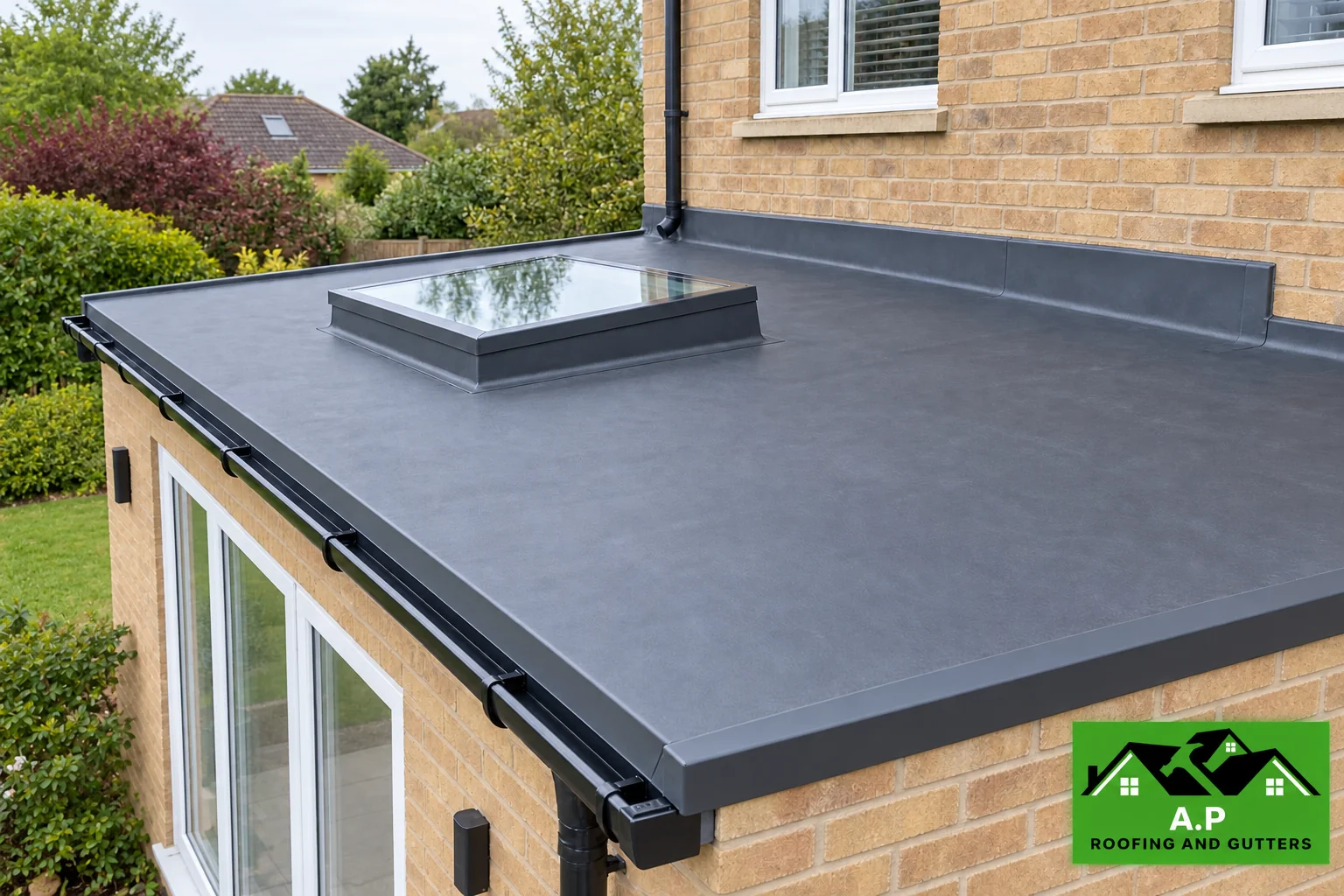
A flexible membrane for flat roofs, with the roof edges, joints and supporting layers designed as one system.
Where EPDM can make sense
EPDM is a synthetic rubber membrane used on many garage, extension and other low-slope roofs. Large sheets can reduce the number of field joints on a simple roof, but the shape of the building still determines how corners, outlets and penetrations are formed. It should be chosen for the actual substrate and roof design. A straightforward rectangle and a roof with several rooflights or parapets present different detailing tasks.
The preparation beneath the membrane
The supporting surface needs to be sound, suitable and prepared for the specified system. Wet insulation, deteriorated decking or loose material cannot simply be concealed by a new sheet. On a replacement roof, we establish which layers will be removed or retained and why. Adhesives, primers, tapes and accessories should be compatible with the membrane and substrate rather than selected as unrelated products.
Corners, seams and wall junctions
The main field may look simple, but the perimeter often determines the reliability of the roof. Changes of direction need suitable formed details, joints need preparation and pressure appropriate to the system, and wall terminations must prevent water tracking behind the sheet. An outlet should sit within a drainage route, not at an accidental high point. The finished specification needs to explain these areas as well as name the membrane.
Insulation and drainage remain separate design questions
Rubber is the waterproofing layer, not the insulation or structural support. A heated extension needs an appropriate thermal and moisture-control build-up beneath it. Falls and outlet capacity still need to be considered. A membrane’s flexibility does not resolve a sagging deck, trapped moisture or a roof surface which directs water away from the drain.
Repair and care
Local damage may be repairable with the correct system materials where the surrounding membrane remains suitable. Avoid general-purpose solvents, incompatible sealants and unplanned penetrations. Keep outlets clear and arrange safe inspections according to the installation guidance. The roof should only be walked on or used in a way its structure and covering were designed to accommodate.
What to ask before choosing EPDM
Ask which system is proposed, how the substrate will be prepared and what happens at rooflights, gutters and wall junctions. Check whether deck repairs and insulation are included, and request the applicable written guarantee terms. A quoted service-life claim is not the same as the cover provided for the particular installation.