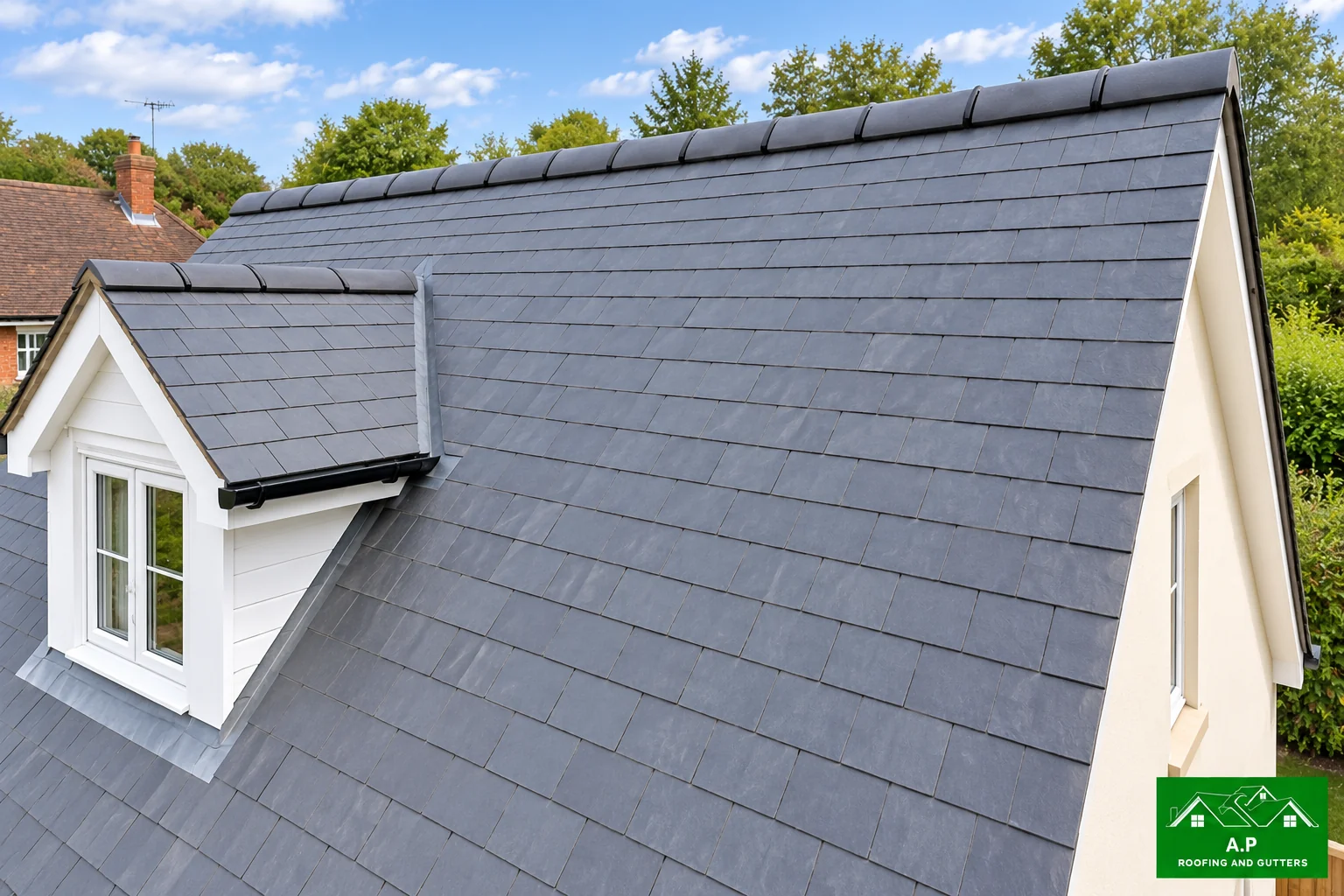
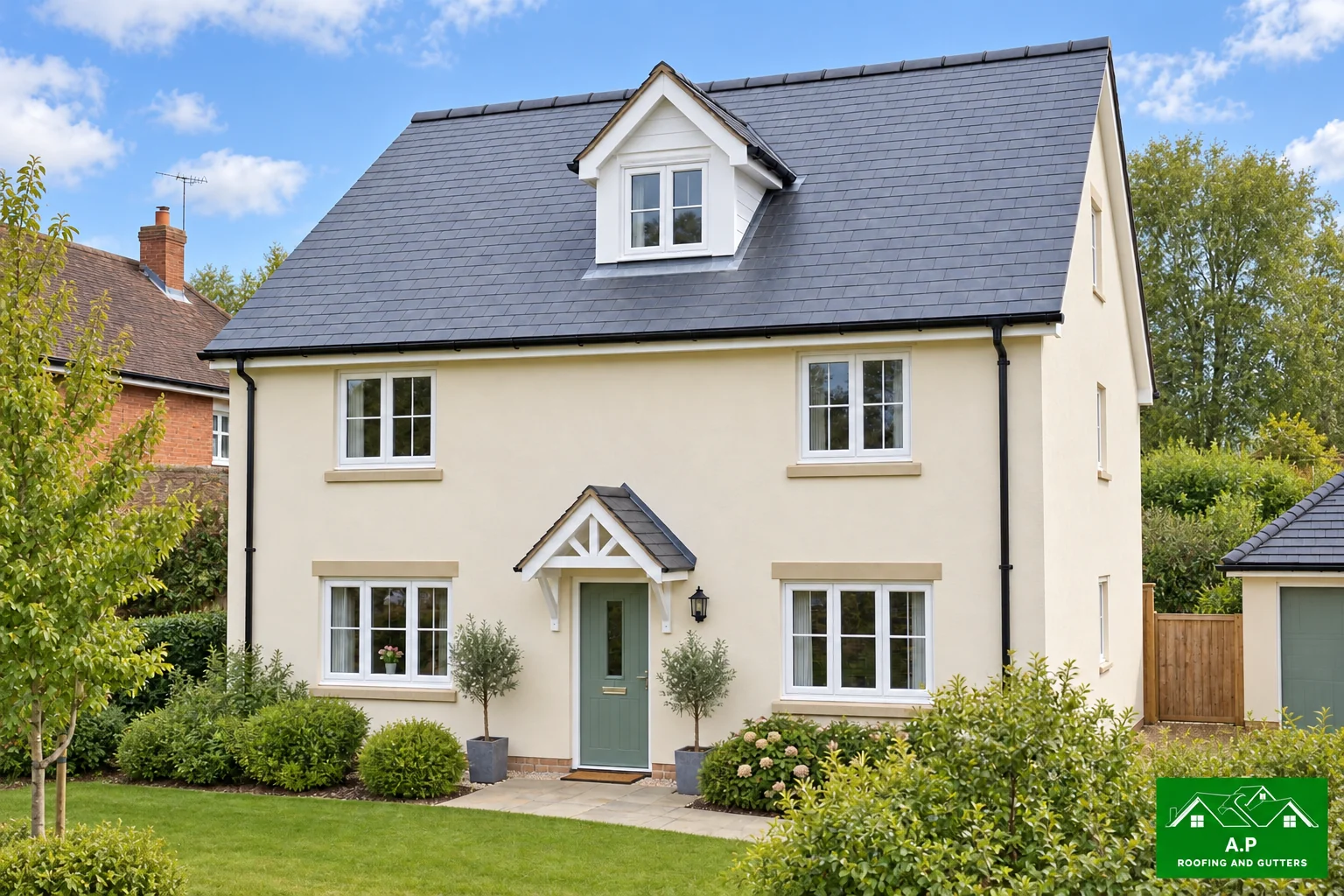
The roof gives this cream-rendered property a quiet, traditional finish. Consistent slate courses and a simple dark ridge line define the main slopes, while leadwork provides the weathering at the dormer and masonry junctions.
Natural slate and setting out
Slate size and headlap determine the coursing as well as the appearance. The field needs to meet the ridge, eaves and dormer without awkward narrow sections. Fixings should secure the units without stressing them, with the specification suited to pitch and exposure.
The dormer junction
A dormer creates several places where materials meet. Its cheeks, front and roof connection need a continuous water route, with lead weathering working alongside the adjacent slate courses. These details deserve the same planning as the main roof field.

The roof edge
A straight eaves line and clean gutter connection complete the elevation. Water leaving the roof needs to reach the rainwater system, while any ventilation required by the build-up remains effective. The result depends on supporting details that are largely hidden once the slate is laid.
Planning a similar slate project
A survey should separate the condition of the slates from the condition of their nails, battens and underlay. Sound slate may be reusable in some cases. Compare the labour and material implications of careful salvage with new covering, and agree any permission requirements before altering a character roof.